
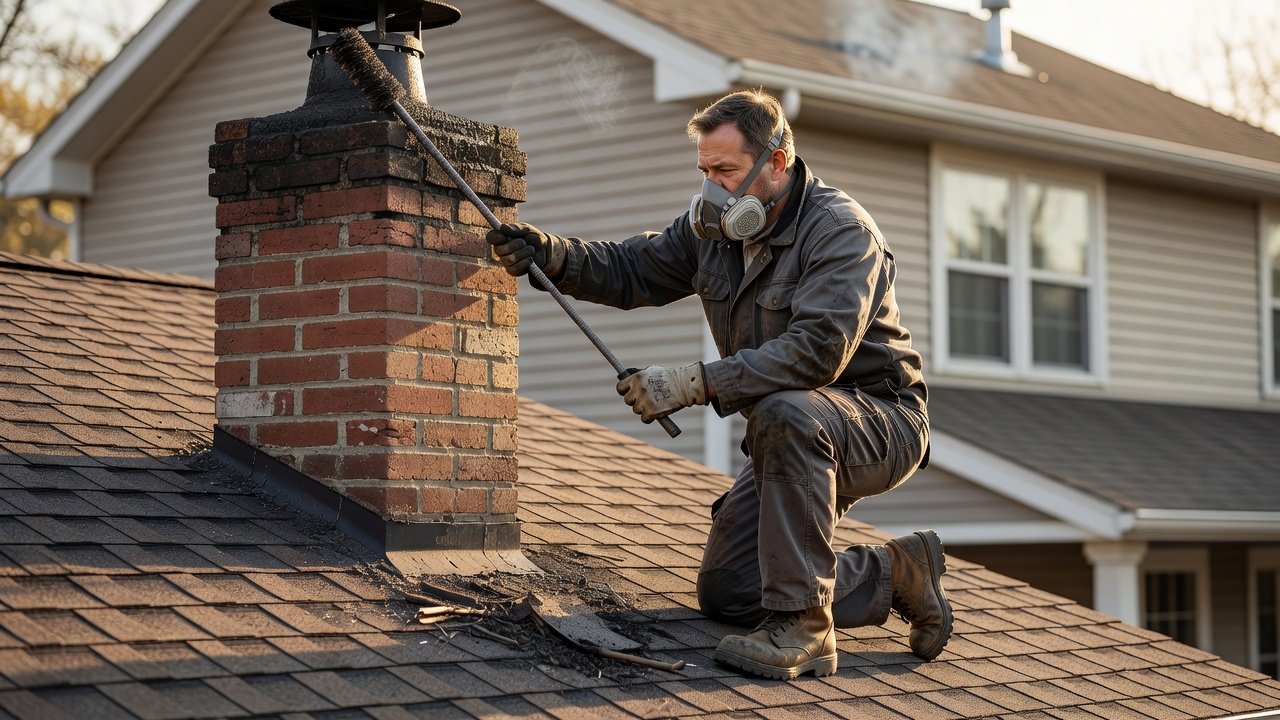
What a Good Chimney Sweep in Deer Park Actually Looks Like and How to Spot the Ones Who Aren’t
Most homeowners in Deer Park, Amityville, and western Suffolk County call a chimney sweep once a year, if that. When something goes wrong, they often have no way to judge whether the person standing on their roof actually knows what they’re doing. That gap between trust and knowledge is where poor contractors can take advantage of homeowners. This guide explains the problems that commonly show up during chimney cleaning and inspection work on Long Island, how qualified technicians diagnose them, and the questions that can help you separate an experienced chimney professional from someone who simply owns a set of brushes.
The Problems That Show Up Most Often in This Area
Deer Park has a mixed housing stock that includes ranch homes from the 1950s and 1960s, newer Colonials, and homes with factory-built fireplaces or heating-system conversions. Amityville’s older homes can also contain clay tile liners that have experienced decades of weather, heat, and deferred maintenance. Here’s what a qualified chimney technician may encounter during an inspection.
Glazed creosote that the homeowner never knew was there.
Creosote develops when wood combustion byproducts condense inside the flue. Lighter deposits are generally easier to remove through routine sweeping. Heavier glazed deposits can bond to the liner and require specialized cleaning methods.
A qualified sweep should identify the type and severity of the buildup before deciding how to remove it. Significant glazed creosote may require chemical treatment, rotary equipment, or multiple cleaning passes.
If a contractor quotes a cleaning without asking about your fireplace, fuel type, previous service, or chimney condition, ask what their inspection process includes before agreeing to the work.
Cracked or spalled clay tile liner.
Clay tile liners can deteriorate from age, thermal stress, moisture, and other factors. A homeowner may notice smoke problems, debris inside the firebox, or other changes, but liner damage is not always visible from below.
A Level 2 inspection with video scanning can provide a much better view of the interior flue. If the liner has significant structural damage, the appropriate repair may involve a stainless steel liner or another approved relining system.
For a single flue in a typical Deer Park home, relining can cost approximately $2,500 to $5,000, depending on chimney height, configuration, liner type, and installation requirements.
Deteriorated chimney crown.
The chimney crown is exposed to rain, snow, temperature changes, and repeated freeze-thaw cycles. Cracks or deterioration can allow moisture into the masonry and contribute to long-term water damage.
Homeowners may notice interior staining, damp odors, or white mineral deposits called efflorescence on the exterior brick.
A chimney sweep who only cleans the flue without checking visible exterior components can miss an important source of moisture intrusion. Crown repairs vary based on the size and condition of the crown, but a basic repair or rebuild may run approximately $200 to $500.
Flue sizing problems after a heating appliance change.
This can become an issue when a home switches from one type of heating appliance to another. A flue designed for one appliance may not be appropriately sized for a replacement system.
Gas appliances can produce cooler exhaust than oil-fired equipment, which can affect draft and condensation within an oversized flue. Rust staining, moisture, or persistent odors can be signs that the venting system needs evaluation.
Proper diagnosis requires reviewing the appliance specifications and the venting system rather than simply assuming the existing flue is suitable.
A deteriorated damper that won’t seal properly.
A warped, rusted, or damaged damper can interfere with normal fireplace operation. It can also allow moisture, outside air, or animals into the fireplace when the system is not in use.
Damper replacement is often relatively straightforward. Depending on the type of damper and installation, homeowners may spend approximately $150 to $350 installed.
An offset or obstructed flue.
Some chimney systems contain offsets that make cleaning more difficult. Bends and irregular sections can collect more deposits and require specialized equipment to reach properly.
A professional should account for the chimney’s configuration before selecting cleaning equipment. For complicated systems, camera inspection can also help confirm that the flue has been adequately evaluated after cleaning.
What Credentials Actually Mean in This Context
The Chimney Safety Institute of America (CSIA) offers the Certified Chimney Sweep credential. Certification demonstrates that a technician has studied chimney systems, combustion, inspection procedures, and applicable safety standards.
The National Fireplace Institute (NFI) also offers certifications for professionals who work with hearth and fireplace appliances, including gas and solid-fuel systems.
Certification does not guarantee that every job will be perfect, but it gives homeowners a meaningful way to evaluate a technician’s training.
Insurance matters too. Ask whether the company carries general liability insurance and workers’ compensation coverage. Ask for documentation rather than relying solely on a verbal assurance.
Red Flags That Should End the Conversation
A contractor who quotes a cleaning price without asking basic questions about your chimney, appliance, previous service, or system configuration may be relying on a generic sales script.
Pressure to approve expensive repairs immediately after an inspection is another warning sign. Serious chimney problems should be documented and explained clearly. A reputable contractor should be able to show you what was found, explain why it matters, and provide a written estimate for recommended repairs.
Be cautious if a contractor refuses to explain what inspection level is appropriate for your system. A Level 2 inspection may be appropriate in situations such as a change in appliance, property transfer, suspected damage, or other conditions that warrant a more detailed evaluation.
You should understand why an inspection is being recommended before paying for it.
What to Expect to Pay for Honest Work
A standard Level 1 chimney sweep and inspection in the Deer Park and Amityville area typically runs around $150 to $250 for a single fireplace.
A Level 2 camera inspection may add approximately $75 to $150, depending on the system and inspection scope.
Prices vary based on chimney height, access, appliance type, buildup, and the condition of the system. Extremely low advertised prices should be evaluated carefully. Ask what the advertised price actually includes and whether inspection, documentation, and cleanup are part of the service.
Schedule Your Inspection Before the Season Gets Busy
Ridgewood Chimney serves homeowners throughout Deer Park, Amityville, and surrounding Suffolk County communities with chimney inspections, cleaning, and repair services.
If you aren’t sure when your chimney was last inspected, or you’re seeing debris, odors, draft problems, or signs of moisture, schedule an evaluation before the heating season gets busy.
Contact Ridgewood Chimney for a free inspection and a clear assessment of your chimney’s condition. You’ll know what needs attention, what can wait, and what the recommended work will cost before making a decision.
Our services
East Farmingdale, NY · Deer Park, NY · Chimney Caps, Crowns & Waterproofing · Flue & Liner Repair · Chimney Rebuilding · Chimney Inspection