
Chimney Waterproofing in Deer Park, NY: What’s Actually Causing the Damage and How Pros Fix It
Water is the single most destructive force acting on a masonry chimney. That’s not a dramatic statement. It’s what you see after a Long Island winter when freeze-thaw cycles have worked their way into every small crack in a chimney crown or mortar joint. In Deer Park and across Suffolk County, the combination of coastal humidity, nor’easters, and temperature swings that can drop 40 degrees in a single day accelerates chimney deterioration faster than most homeowners realize. By the time water stains appear on a ceiling or a brick face starts spalling, the damage has usually been building for two or three seasons.
This post breaks down the actual problems that show up on Deer Park chimneys, how a trained technician diagnoses them, and where the line is between work you can do yourself and work that genuinely needs a professional.
Water Stains on the Ceiling or Firebox Wall
What you see:
Brown or rust-colored staining on the ceiling near the chimney, or along the firebox interior after rain.
What’s actually happening:
A stain directly above the firebox usually points to a failed or missing chimney cap, or a cracked flue liner where water travels down the tile surface and wicks into the masonry. Stains that appear lower, near the roofline, more often indicate flashing failure. The metal seal between the chimney base and roof deck has lifted, corroded, or was never properly counter-flashed into the mortar joints.
How it gets diagnosed:
A technician won’t just look at the stain. They’ll trace it. That means a CSIA-standard Level 2 inspection with camera imaging of the flue to rule out liner cracks, combined with a physical check of the cap, crown, and flashing from the roof. If the flashing looks intact from below but water is still getting in, a water flood test, with controlled water applied to specific areas while someone watches inside, isolates the entry point.
Professional fix:
Flashing repair in Deer Park typically runs $350 to $650 depending on whether the step flashing needs to be re-integrated into the mortar joints or the counter-flashing is just reseated. A new cap with spark arrestor mesh runs $175 to $275 installed. Liner repair varies considerably.
Can this be prevented?
Yes. Annual inspection catches flashing separation before it becomes a full repair. NFPA 211 recommends yearly inspection for any chimney in active use. That standard exists precisely because failure is incremental, not sudden.
Spalling Brick on the Chimney Exterior
What you see:
Brick faces breaking off, flaking, or developing a rough, pitted surface. You might find brick fragments on the roof or in the gutters.
What’s actually happening:
When water penetrates brick and the temperature drops below freezing, that water expands roughly 9% as it turns to ice. Over repeated cycles, the face of the brick fractures and separates. Deer Park averages around 26 freeze-thaw cycles annually, enough to turn a minor surface crack into significant structural damage within a few seasons.
How it gets diagnosed:
A technician looks at the pattern of spalling. Damage concentrated near the cap or crown suggests water is running down from above. Spalling spread across multiple courses lower on the chimney often points to the brick absorbing water laterally, a sign that waterproof coating was either never applied or has worn through.
Professional fix:
Spalled brick that’s lost more than a third of its face needs to be replaced. Tuckpointing alone won’t stabilize it. Replacement brick costs $8 to $18 per unit installed, plus labor.
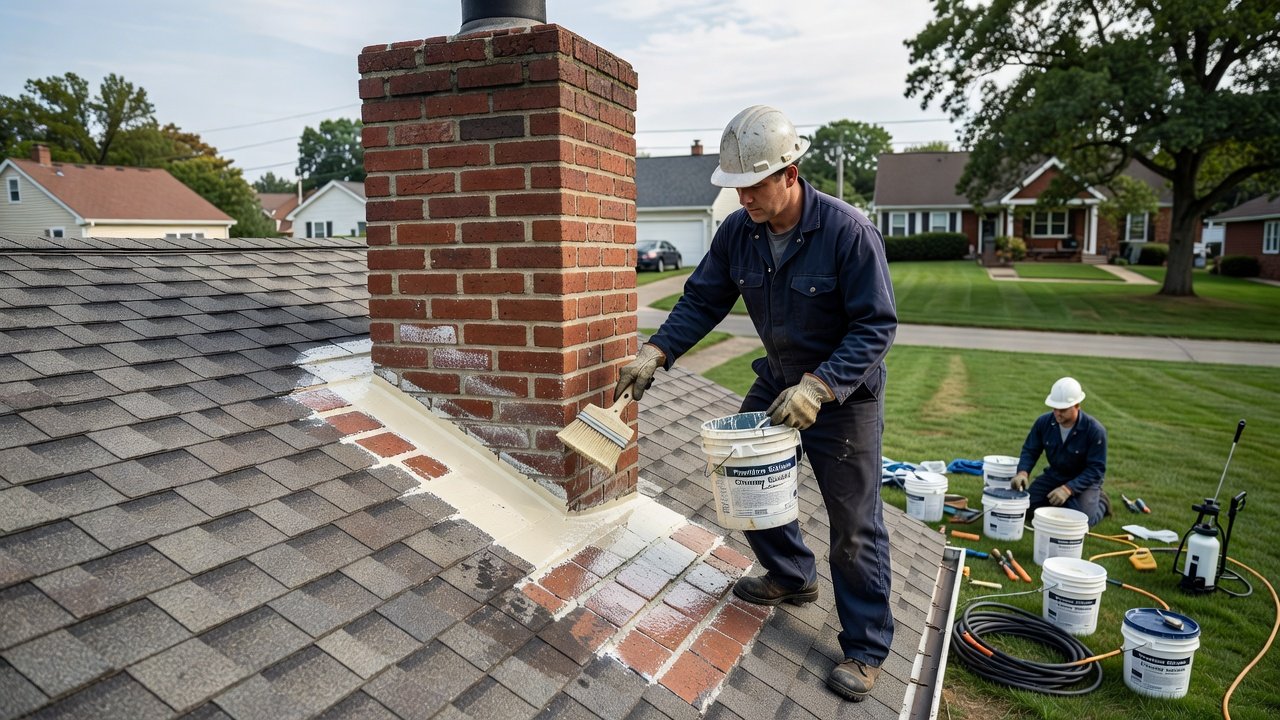
After repairs, a vapor-permeable waterproofing product, not a standard masonry sealer that traps moisture inside, is applied to the entire chimney surface. Products like ChimneySaver Water Repellent are specifically formulated for this. A standard paint or hardware-store sealer can actually accelerate freeze-thaw damage by trapping moisture in the masonry.
DIY limit:
You can apply waterproofing yourself if the masonry is in sound condition and you’re comfortable on a roof. But if you’re applying it over compromised mortar or hairline cracks, you’re sealing in a problem. A professional assessment first is worth the cost.
Deteriorating Chimney Crown
What you see:
Visible cracking across the concrete cap at the top of the chimney, sometimes with chunks missing.
What’s actually happening:
The chimney crown is the first line of defense against water entry, and it’s often the first thing to fail. Many crowns on Deer Park homes built in the 1970s and 1980s were poured with a simple mortar mix flush to the brick, with no overhang or drip edge. Water runs straight down the chimney face.
A proper crown should extend past the brick by at least two inches and slope away from the flue tile.
Professional fix:
Small cracks under 1/4 inch wide can be sealed with a flexible elastomeric crown coat product. Larger cracks or a crown that’s structurally compromised needs to be chipped out and rebuilt. Crown rebuild runs $300 to $550 in Suffolk County.
This is not a difficult repair, but it requires getting the overhang geometry right, which is where DIY attempts often fall short.
Efflorescence That Keeps Coming Back
What you see:
White, chalky deposits appearing on the brick exterior, often after rain.
What’s actually happening:
Efflorescence is mineral salt being carried to the surface by water moving through the masonry. The deposit itself isn’t dangerous, but it’s a reliable sign that water is actively migrating through the brick.
Brushing it off without addressing the source accomplishes nothing. It comes back within weeks.
Diagnostic reasoning:
Persistent efflorescence despite a supposedly waterproofed chimney usually means the coating has failed, the mortar joints are eroded enough to let water bypass the coating, or the flashing is letting water in from the top.
A technician checks mortar joint depth. Anything eroded more than 1/4 inch is a water pathway. They also probe the crown condition.
Professional fix:
Tuckpointing deteriorated joints, then re-coating with a proper water repellent. Tuckpointing a full chimney in Deer Park typically runs $400 to $900 depending on chimney height and how many courses need attention.
What Homeowners Can Actually Do Themselves
Regular visual checks from the ground are genuinely useful. Note any new cracks in the crown, look for brick fragments, and watch for staining on interior ceilings after heavy rain. Keeping gutters clear matters too. Overflowing gutters accelerate water saturation at the chimney base.
Applying a chimney-specific water repellent to sound masonry is within reach for a careful homeowner, but only after a professional has confirmed the masonry and mortar joints are in good condition. Skipping that step and coating over hidden damage is one of the more common errors we see on Long Island chimneys.
What genuinely requires a professional includes any work involving flashing, crown rebuilding, liner repair, or diagnosing the source of interior water staining. These require proper diagnosis, and an incorrect repair often costs more than the original problem.
Schedule a Free Chimney Inspection in Deer Park
If you’ve noticed any of these signs on your chimney, or you simply haven’t had it inspected since before last winter, now is the right time to get a professional eye on it.
We serve Deer Park, Dix Hills, Babylon, Huntington, and across Suffolk County. Our technicians follow CSIA and NFPA 211 standards on every inspection, and we’ll give you an honest assessment of what needs attention and what can wait.
Contact us to schedule your free inspection. Catching a failing crown or deteriorated flashing before winter costs a fraction of what water damage repair costs after.
Related from Deer Park Chimney NY: Professional Chimney Repair in Deer Park, NY · Protect Your Home with a Professional Chimney Inspection in Deer Park, · Chimney Sweep Services in Deer Park, NY