
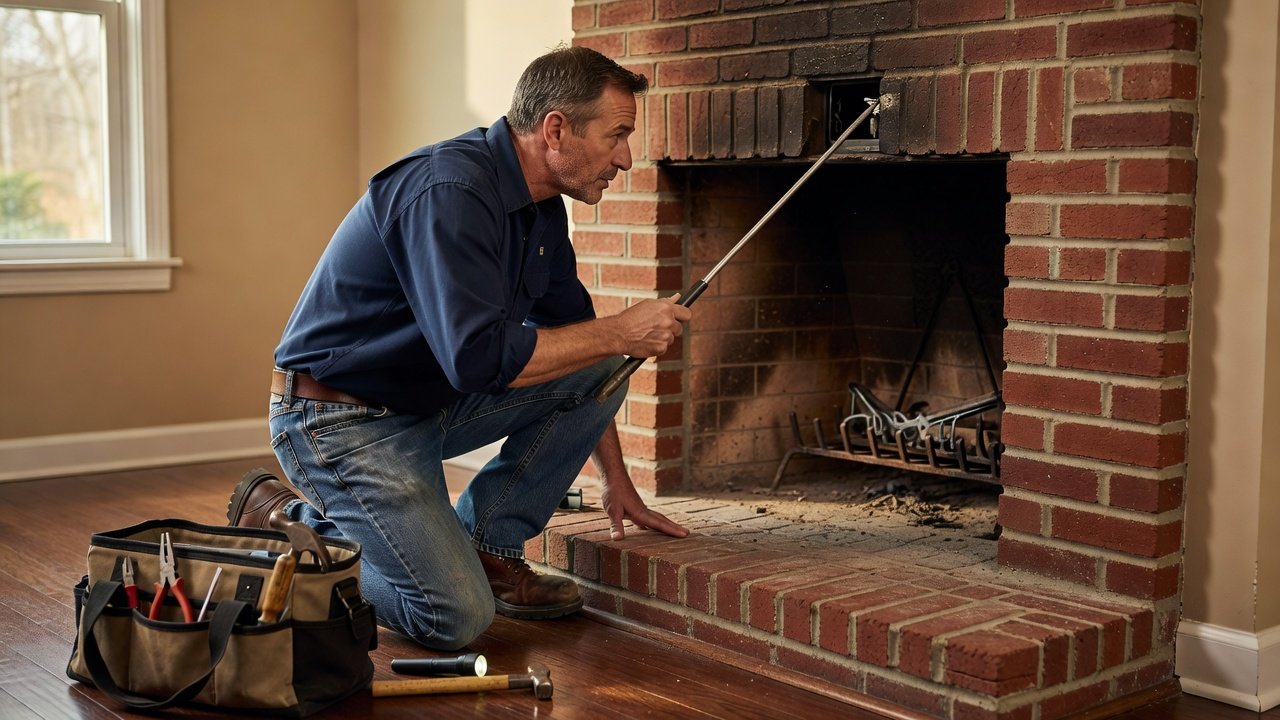
How to Diagnose and Fix a Stuck or Broken Chimney Damper in Deer Park and Wyandanch
A chimney damper that will not close can affect both comfort and efficiency. Cold air can move down through the chimney and into a heated living room, increasing heat loss during a Suffolk County winter. A damaged or improperly functioning damper can also contribute to draft problems when the fireplace is in use.
Before assuming that the entire damper needs to be replaced, homeowners can perform a few basic checks. However, some problems require a qualified chimney professional. Knowing where that line is can help you avoid unnecessary repairs while keeping the fireplace safe.
Before You Start
Start with a strong flashlight. A phone light may not provide enough visibility inside the firebox. You should also have safety glasses, a dust mask, old clothing, and a drop cloth to protect the fireplace area.
If the fireplace has been used within the previous 24 hours, wait before beginning. Ash and fireplace components can remain hot long after the fire appears to be completely out.
Next, determine which type of damper you have.
A throat damper is located just above the firebox and is typically controlled by a handle or rotating lever. A top-mounted damper sits at the top of the chimney and is generally operated by a cable or chain running down through the flue.
The repair process can be different for each type. Many older homes in Deer Park and Wyandanch have throat dampers, although some systems have been upgraded with top-mounted dampers over the years.
Step 1: Identify What Is Actually Wrong
Open and close the damper several times while paying attention to how it moves and sounds.
Determine whether:
- The damper will not open.
- It opens but will not fully close.
- It moves but does not seat correctly.
- The handle or operating mechanism is broken or missing.
Write down what you observe. This information can help a chimney professional understand the problem before arriving.
A damper that will not open may have debris or creosote interfering with the hinge. A damper that will not fully close may have a warped plate or a frame that has shifted over time.
Step 2: Inspect the Damper for Visible Damage
Use your flashlight to examine the damper plate and surrounding frame from inside the firebox.
Some surface rust is common on older cast-iron dampers. However, heavy flaking, deep pitting, cracks, or significant corrosion indicate that the component may need replacement.
Pay particular attention to:
- Cracks across the damper plate
- Cracks in the surrounding frame
- Severe corrosion
- Warped metal
- Loose or damaged hardware
A cracked or badly deteriorated damper should not be patched as a temporary fix. If the metal is structurally damaged, skip the basic cleaning steps and have a professional evaluate it.
Step 3: Clean the Hinge and Frame
If the damper appears structurally sound but feels stiff, debris may be preventing it from moving correctly.
Using a stiff wire brush appropriate for fireplace or chimney maintenance, carefully remove loose creosote, rust, and debris around the hinge and frame.
Work slowly. The smoke shelf and surrounding area can contain years of accumulated debris.
After cleaning, test the damper again. If it moves more freely, the problem may have been caused by buildup rather than a damaged component.
If lubrication is appropriate for the damper, use a product specifically rated for high-temperature chimney or fireplace applications. Avoid using ordinary household lubricants that are not designed for high-temperature environments. If cleaning does not allow the damper to close properly, the problem may be mechanical rather than simply buildup.
Step 4: Check the Fireplace Draft
Once you’ve made any basic adjustment, the next question is whether the chimney is drafting properly. With the damper fully open, a small amount of smoke or a lightweight piece of tissue held near the opening should move upward toward the flue. If the air movement is weak, moves sideways, or comes back into the room, don’t assume the damper is the only problem.
Poor draft can also be caused by:
- A blocked flue
- A damaged liner
- An obstruction near the chimney cap
- Negative air pressure inside the home
- An improperly configured chimney system
Homes in Deer Park and Wyandanch may have older masonry chimney systems that have experienced decades of changes to insulation, windows, heating equipment, and home ventilation. Those changes can affect how the chimney drafts.
If the fireplace continues to smoke into the room, stop using it until the cause has been professionally evaluated.
Step 5: Know When to Call a Professional
A CSIA-certified chimney professional should evaluate the system if:
- The damper plate or frame is cracked.
- The damper is severely warped.
- The metal is corroded through.
- The chimney has poor draft even with the damper fully open.
- A top-mounted damper has a broken or jammed cable.
- Heavy creosote prevents you from properly seeing the damper.
- The damper handle has separated from the operating mechanism.
- Smoke consistently enters the living space.
A damper is part of the chimney and venting system, so its condition should not be treated as merely cosmetic. A professional can also determine whether the damper problem is actually a symptom of a larger issue with the flue, liner, chimney cap, or draft.
Step 6: Understand the Cost of Damper Replacement
Based on the pricing ranges provided for the Deer Park and Wyandanch area, a throat damper replacement typically costs approximately $200 to $450, including parts and labor.
A top-mounted damper replacement generally runs about $300 to $600 installed. The final price depends on factors such as firebox size, accessibility, the type of damper, and the amount of work required.
If the damper problem is associated with poor draft or another chimney event, a more detailed inspection may also be recommended. The source pricing places a Level 2 inspection at approximately $150 to $250 in addition to the repair. Always request a written estimate before authorizing replacement work.
Step 7: Prevent the Problem from Returning
Once the damper has been repaired or replaced, regular chimney maintenance can help identify problems before they become emergencies.
The CSIA recommends annual chimney inspections for chimneys in active use. Scheduling service before the heating season gives a technician an opportunity to examine the damper, flue, chimney cap, and other accessible components.
For fireplaces that receive heavy use during the Suffolk County winter, a spring inspection can also help identify damage or excessive creosote buildup after the burning season.
Troubleshooting: The Damper Closes, but You Still Feel a Draft
Sometimes the damper appears to close correctly, but cold air continues to enter the room.
One possible explanation is that the damper frame has shifted slightly, preventing the plate from creating a complete seal. Repeated heating and cooling can also cause the damper plate to warp.
Cleaning or lubrication will not correct structural misalignment or a severely warped plate.
In some situations, a top-mounted damper can provide an alternative sealing solution. Because it seals at the top of the chimney rather than at the throat, it may provide a tighter closure depending on the existing chimney configuration.
A professional should evaluate the chimney before determining whether this is the appropriate solution.
Frequently Asked Questions About Chimney Dampers in Deer Park, NY
1. Why won’t my chimney damper close completely?
A damper may fail to close because of creosote, debris, corrosion, a warped plate, or a shifted frame. If cleaning the accessible hinge and frame does not resolve the problem, have a chimney professional evaluate the damper and surrounding chimney system.
2. How much does chimney damper replacement cost in Deer Park, NY?
A throat damper replacement typically costs approximately $200 to $450, including parts and labor. A top-mounted damper generally costs about $300 to $600 installed, although accessibility, damper type, and the amount of work required can affect the final price.
3. Can I repair a chimney damper myself?
Basic cleaning of loose debris around an accessible, structurally sound damper may be reasonable for a homeowner. Cracked, severely corroded, warped, or mechanically damaged dampers should be evaluated and repaired or replaced by a qualified professional.
4. Why does my fireplace still have a draft when the damper is closed?
A draft can continue if the damper plate is warped, the frame has shifted, or the damper does not create a complete seal. A top-mounted damper may provide a tighter seal in some chimney configurations, but a professional should evaluate the system before recommending that solution.
5. When should I call a chimney professional about a damper problem?
Call a professional if the damper is cracked, severely corroded, warped, stuck, or has a broken operating mechanism. Professional evaluation is also important if smoke enters the room, the chimney has poor draft, or heavy creosote prevents you from properly seeing or operating the damper.
Get Your Damper Checked Before Winter
A stuck or broken damper is easier to address when it is discovered before the middle of the heating season.
Ridgewood Chimney serves homeowners in Deer Park, Wyandanch, and surrounding Suffolk County communities with chimney inspections and damper repair services.
If you’ve cleaned the accessible area and the damper still will not operate properly, or if you’re experiencing smoke or draft problems, a professional inspection can determine whether you need a simple adjustment, a damper replacement, or further chimney work.
Contact Ridgewood Chimney to schedule an inspection before a small damper problem becomes a larger winter repair.
Related from Deer Park Chimney NY: Professional Chimney Repair in Deer Park, NY · Chimney Sweep Services in Deer Park, NY