
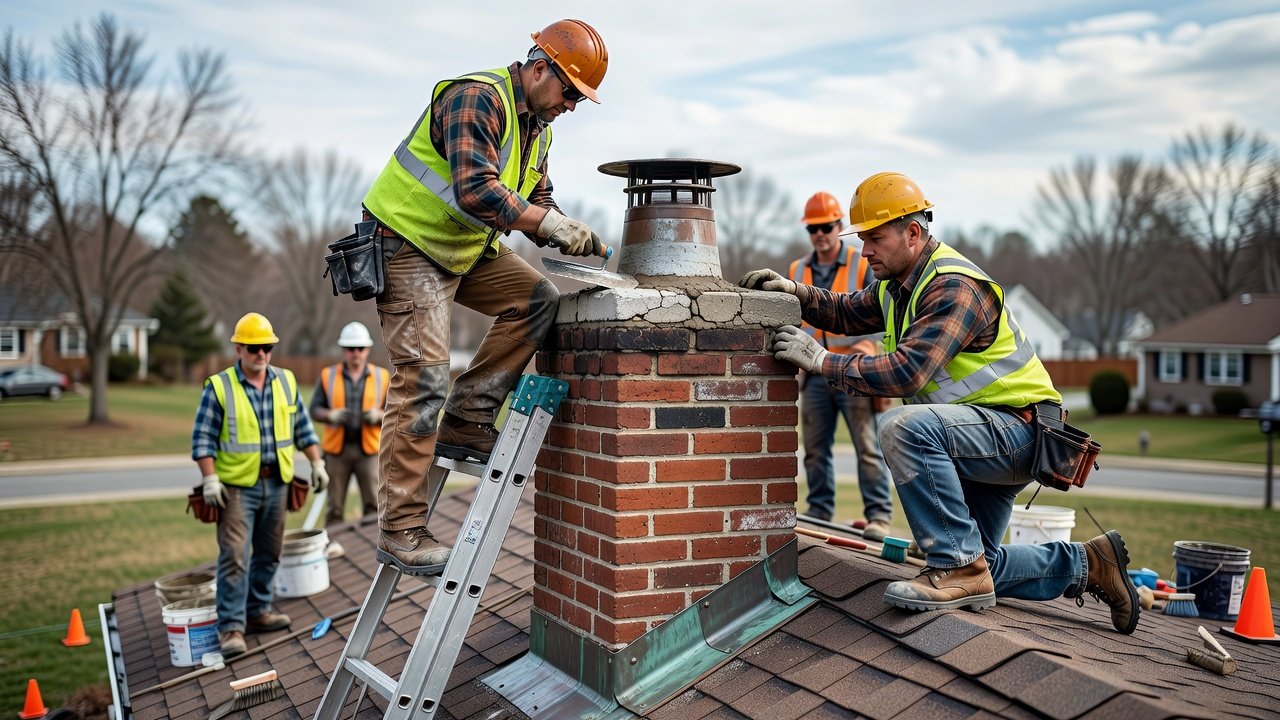
Chimney Crown Repair in Deer Park and North Babylon: When You Book Makes a Big Difference
Cracked chimney crowns rarely announce themselves with drama. Water finds its way in quietly, freeze-thaw cycles widen the gap a little more each winter, and by the time a North Babylon homeowner notices staining on the firebox wall or spalling brick on the exterior, the repair bill has grown considerably beyond what a simple crown patch would have cost a year earlier. Timing a chimney crown repair correctly is one of the more practical decisions a homeowner can make. It affects material performance, contractor availability, and ultimately cost. Here is what the calendar actually looks like for chimney crown work in this part of Long Island.
Why the Crown Matters More Than Most Homeowners Realize
The chimney crown is the concrete or mortar cap that seals the top of the chimney’s masonry shell, leaving only the flue liner exposed. It sheds rain and snow away from the brick below. When it cracks, water enters the chimney system directly.
NFPA 211, the standard governing chimneys and fireplaces, specifically identifies deteriorated crowns as a pathway for water infiltration that accelerates structural damage to the entire chimney system. In Deer Park and North Babylon, the freeze-thaw pattern is the real culprit. Temperatures here swing through freezing and thawing roughly 40 to 60 times each winter season. Each cycle forces water deeper into any existing crack. A hairline crack in October can be a half-inch fracture by March.
The CSIA notes that water damage is the leading cause of chimney deterioration in the Northeast, and the crown is the first line of defense.
Late Summer and Early Fall: The Best Window to Book
August through mid-October is the optimal period for chimney crown repair on Long Island. A few reasons converge here. Temperatures are consistently above 50 degrees Fahrenheit, which masonry repair materials need to cure properly. You have months of buffer before the first hard freeze. Contractor schedules, while busier than deep winter, are still predictable enough that you can get on the calendar without a long wait.
Homeowners in North Babylon who schedule crown inspections in August or September are also catching any damage that developed over the prior winter before it compounds. A CSIA-certified technician can assess whether a crown sealant application is sufficient or whether the crown needs to be rebuilt entirely.
That distinction matters for cost. A sealant job on a crown with hairline cracking might run $200 to $400. A full crown rebuild using proper mix ratios and correct overhang geometry runs $600 to $1,200 depending on chimney size. Neither number is alarming if caught early.
What the Repair Process Involves
A proper chimney crown repair starts with an inspection from the roofline or a ladder, not from the ground. The technician checks the crown’s overhang, which should extend at least two inches beyond the chimney’s face on all sides. They also look for cracks, check the caulked joint between the crown and the flue liner, and assess whether the existing structure can be patched or needs full removal.
If patching is appropriate, the damaged area is cleaned, a flexible chimney crown sealant or repair mortar is applied, and the surface is feathered smooth.
If the crown is beyond patching, the old material is chipped away and a new crown is poured or hand-formed using a mix with low water content and proper reinforcement. The repair must be allowed to cure before rain exposure, which is another reason fall scheduling beats trying to squeeze work in during a wet spring.
Late Fall and Winter: Not Impossible, But Complicated
November through February is technically workable for crown repair, but conditions create real constraints. Masonry products cannot be applied below 40 degrees without cold-weather additives and sometimes heated enclosures. On a roof in Deer Park in January, that requirement is difficult to meet reliably.
Some contractors decline this work entirely in winter. Others use hydraulic cement or polymer-based products with better cold tolerance, but the material cost goes up and so does labor.
There is also the scheduling crunch. Late October through November is when most Suffolk County homeowners realize they meant to call about the chimney in September. Appointment lead times that were two weeks in August can stretch to four or six weeks by Thanksgiving. If your chimney is actively leaking, that delay has real consequences inside the house.
Spring: Better Than Winter, but You Are Already Behind
March and April bring workable temperatures, and some homeowners use spring as a catch-up window after a hard winter. It is a reasonable time to repair damage that appeared or worsened over the season.
The issue is that the crack has already gone through the worst of the freeze-thaw cycle, so the inspector will often find more deterioration than was visible the prior fall.
Spring is also when demand picks up again. Contractors are booking chimney inspections, liner work, and masonry repairs simultaneously. Getting a crown repaired in April or May is entirely feasible, but expect a two to four week lead time in North Babylon and surrounding communities like Wyandanch or West Babylon.
What Waiting Too Long Actually Costs
A deteriorated chimney crown does not sit still. Water entering through crown cracks saturates the mortar joints below it. In a typical North Babylon home with a full masonry chimney, replacing deteriorated mortar joints through a process called tuckpointing can add $800 to $2,000 or more to a repair scope that started as a $300 crown patch.
If water reaches the smoke chamber or firebox, repair costs climb further. If a flue tile cracks from freeze pressure or water exposure, you are looking at liner repair or replacement, which is a different category of cost entirely.
The CSIA recommends annual chimney inspections for systems in regular use, and that inspection should include a close look at the crown. NFPA 211 supports the same standard. Neither organization suggests waiting until something visible goes wrong, because by then the structural damage is usually ahead of what the eye catches.
Schedule Before the Rush Hits
If your chimney crown has not been inspected this year, late summer is the right time to call. Ridgewood Chimney serves North Babylon, Deer Park, and surrounding Suffolk County communities with CSIA-certified technicians who can assess your crown condition and give you a straight answer about whether you need a patch, a rebuild, or just a sealant application to protect sound concrete.
Contact us for a free chimney inspection before the fall booking rush fills the calendar. A conversation now costs nothing. Waiting until December often costs considerably more.
Related from Deer Park Chimney NY: Professional Chimney Repair in Deer Park, NY · Chimney Repair in Deer Park, NY · Chimney Repair in Deer Park — What It Costs, What It Fixes, and Who Do