
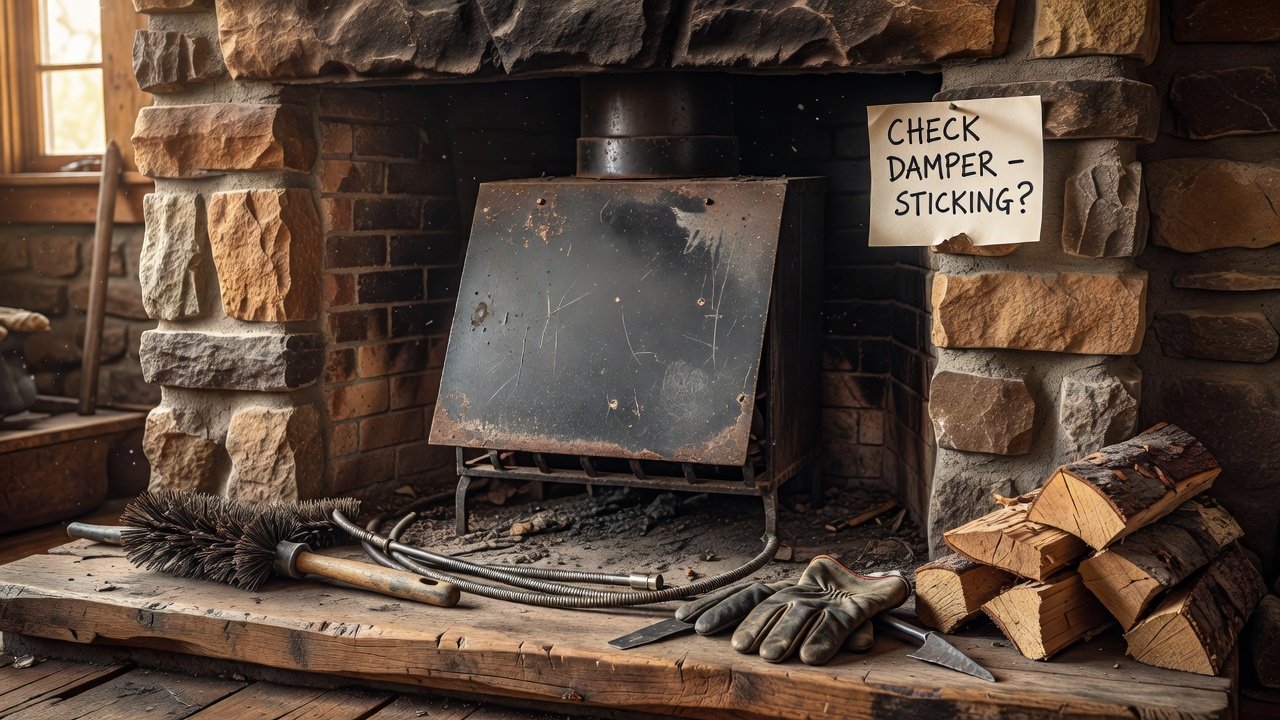
Signs Your Chimney Damper Needs Repair: What Homeowners Should Know Before Winter
A properly functioning chimney damper helps regulate airflow when your fireplace is in use and reduces drafts when it is not. Over time, however, dampers can become difficult to operate because of rust, corrosion, creosote buildup, or normal wear. Addressing these issues before the heating season can help ensure your fireplace operates as intended and may prevent more extensive repairs later.
If you’ve noticed drafts, difficulty opening or closing the damper, or unusual fireplace performance, here’s what you should know.
Know Which Type of Chimney Damper You Have
Most older homes have a throat damper, located just above the firebox at the base of the chimney. These cast-iron dampers may develop corrosion or mechanical wear after years of exposure to heat and moisture.
Some fireplaces have top-sealing dampers, which are installed at the top of the chimney and operated with a cable system. Because these dampers use different components, the repair approach depends on the type of damper installed.
If you’re unsure which style your fireplace has, a professional chimney inspection can identify the system and determine whether repair or replacement is the better option.
Common Signs of Chimney Damper Problems
A damaged or malfunctioning damper may cause several noticeable symptoms, including:
- Cold drafts coming through the fireplace when it is not in use.
- Difficulty opening or closing the damper.
- Smoke entering the room during fireplace use.
- A damper handle that moves without opening or closing the damper properly.
- Visible rust, corrosion, or damaged metal components.
These symptoms can also be associated with other chimney issues, so a professional inspection is recommended before repairs are performed.
Schedule Repairs Before Peak Fireplace Season
Many homeowners schedule chimney inspections and repairs shortly before colder weather arrives. Planning service before the busiest part of the heating season may provide greater scheduling flexibility and allow enough time to complete any recommended repairs before regular fireplace use begins.
If your chimney has not been inspected recently, consider scheduling a chimney inspection at the same time as the damper evaluation. The National Fire Protection Association (NFPA 211) recommends that chimneys, fireplaces, vents, and solid fuel-burning appliances be inspected at least once each year and cleaned whenever necessary.
Professional Inspection Comes First
Before recommending repairs, a qualified chimney technician should inspect the damper and other accessible components of the chimney system.
Depending on the condition of the existing damper, the technician may recommend:
- Repairing existing damper hardware.
- Replacing damaged components.
- Installing a new throat damper.
- Upgrading to a top-sealing damper if appropriate for the chimney system.
The most appropriate solution depends on the condition of the existing equipment, accessibility, and the overall condition of the chimney.
Prepare for Your Appointment
Before the technician arrives, clear the area around the fireplace by removing fireplace tools, decorations, and nearby furniture if possible.
If your fireplace has a gas log set or gas insert, let the chimney company know when scheduling the appointment, as this may affect inspection and repair procedures.
Confirm the Damper Operates Properly
Once repairs are complete, the technician should verify that the damper opens and closes smoothly and operates correctly throughout its full range of motion.
If a top-sealing damper has been installed, the cable mechanism should also be demonstrated so you understand how to operate it properly.
Consider Having the Chimney Cap Inspected
Because chimney caps help reduce water intrusion into the chimney system, many homeowners choose to have the cap inspected whenever roof-level chimney work is performed.
A damaged or missing chimney cap can allow rain, debris, and animals to enter the chimney, potentially contributing to corrosion and other maintenance issues over time.
When the Handle Moves but the Damper Doesn’t
If the damper handle turns freely without opening or closing the damper, the operating mechanism may be worn or damaged.
Although this problem may involve damaged linkage components, additional inspection is necessary to determine whether other parts of the damper assembly have also been affected. A professional evaluation can identify the cause and recommend the appropriate repair.
Schedule Your Chimney Damper Inspection
If your fireplace has drafts, a sticking damper, or other signs of damper wear, scheduling an inspection before the heating season can help ensure your chimney system is ready for use.
Ridgewood Chimney proudly serves homeowners throughout Deer Park, Wyandanch, and surrounding Long Island communities with professional chimney inspections, damper repairs, and maintenance services. Our experienced technicians evaluate the condition of your chimney system, explain any recommended repairs, and provide clear, honest guidance to help you make informed decisions.
Contact Ridgewood Chimney today to schedule your chimney damper inspection and prepare your fireplace for the upcoming heating season.
Our services
Lindenhurst, NY · West Babylon, NY · Wyandanch, NY · Farmingdale, NY · East Farmingdale, NY · Deer Park, NY