
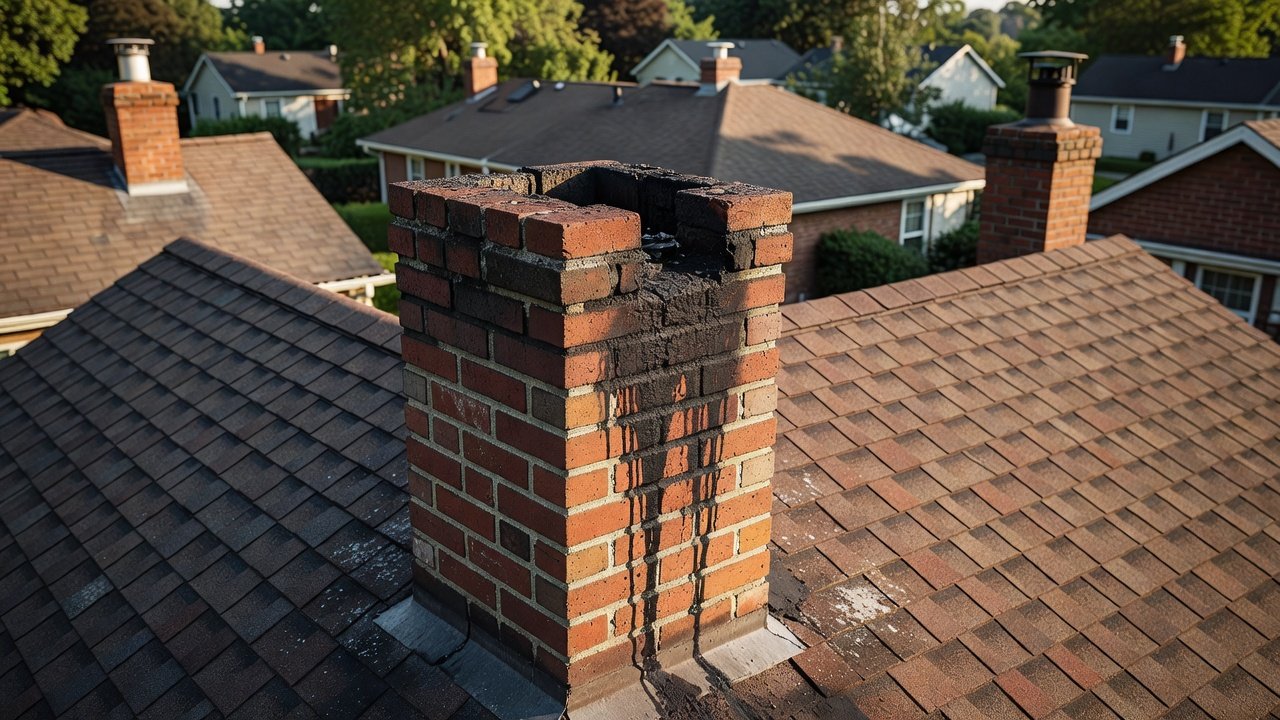
Chimney Cap Missing in Deer Park, NY? Warning Signs and What to Do
Most homeowners in Deer Park and Amityville do not think about their chimney cap until they notice a problem. Water may be entering the chimney. Debris may be accumulating near the damper. Birds or other animals may be using an open chimney.
A missing or damaged chimney cap is more than a cosmetic issue. A properly designed cap or rain cap can help keep precipitation, animals, leaves, and other debris out of the chimney system. It can also help reduce wind-driven downdrafts and, depending on its design, provide spark protection.
If your chimney cap is missing, damaged, tilted, or heavily corroded, it is worth having the chimney evaluated rather than waiting for a larger problem to develop.
Why a Chimney Cap Matters
A chimney cap sits at the top of the chimney and helps protect the flue from the elements.
CSIA explains that an uncovered chimney allows rain, snow, and sleet to enter the chimney. Moisture can then move into masonry and contribute to deterioration of bricks and mortar. Freeze and thaw conditions can make existing deterioration worse.
A cap can also help keep animals, birds, leaves, and twigs from entering the chimney. Debris inside a chimney can create a blockage and may interfere with proper venting.
New York’s current residential code also contains requirements for masonry chimney caps and rain caps. For example, the 2025 Residential Code of New York State specifies requirements for masonry chimney caps, including provisions intended to shed water, as well as requirements for certain spark arrestors and rain caps. The exact requirements depend on the chimney and installation.
Warning Signs Your Chimney Cap May Be Missing or Damaged
White Staining on the Chimney
White or chalky staining on masonry may be efflorescence. It occurs when water moves through masonry and leaves mineral deposits behind as it evaporates.
Efflorescence does not prove that the chimney cap is the source of the water. Flashing, the crown, masonry joints, and other components can also allow water into a chimney.
If you see recurring moisture staining, have the chimney evaluated to determine where the water is entering.
Rust Around the Damper
Rust on metal components around the damper or fireplace can indicate moisture exposure.
A missing cap can allow precipitation into the chimney, but rust does not identify the exact source by itself. Other forms of water intrusion can contribute to corrosion as well.
A professional can determine whether the damper is still operating properly and whether additional inspection is needed.
Birds or Animals in the Chimney
An open chimney can provide access for birds and other wildlife.
Chimney swifts are a special consideration. The U.S. Fish and Wildlife Service explains that chimney swifts are protected under the Migratory Bird Treaty Act. They commonly arrive in the United States during March or April and leave in August or September, although timing varies by location.
If you hear birds inside the chimney, do not immediately try to remove a nest or install a cap over an occupied chimney. Active nests may be protected, and the appropriate response depends on the species and circumstances.
A chimney professional familiar with wildlife considerations can help determine what should happen next.
A Musty Smell From the Fireplace
A damp or musty odor can sometimes indicate moisture inside the chimney.
However, smell alone cannot establish that a missing chimney cap is responsible. Water can enter through several parts of a chimney system, including the crown, flashing, masonry, or other openings.
If the odor appears after rainfall or is accompanied by visible moisture, an inspection can help identify the source.
Deteriorating Masonry Near the Top
Cracked mortar, loose bricks, spalling masonry, or deterioration around the chimney top should not be ignored.
The problem may involve the cap, crown, masonry, or the connection between different components.
Use binoculars from the ground if you want to make a preliminary observation. Avoid climbing onto the roof simply to inspect the chimney yourself.
Water or Wet Ash in the Firebox
Water appearing in the fireplace after rain is a reason to investigate.
The cap may be one possible entry point, but it is not necessarily the only one. A professional should determine whether water is entering through the chimney opening, crown, flashing, masonry, or another component.
If you regularly find wet ash or visible water in the firebox, avoid assuming the issue will resolve on its own.
A Tilted or Damaged Cap
A cap that is visibly tilted, detached, heavily corroded, or missing its protective screen may no longer be providing the protection the chimney needs.
Do not attempt to climb onto the roof to secure it unless you are properly equipped and trained for the work. Chimney and roof work can involve significant fall hazards.
Can a Missing Chimney Cap Increase Heating or Cooling Costs?
A chimney with a damper that does not close properly can allow conditioned indoor air to move through the chimney.
However, it would be inaccurate to blame an increase in heating or cooling costs specifically on a missing chimney cap without inspecting the system.
A missing cap can contribute to moisture exposure, debris accumulation, and animal entry. Those conditions may eventually affect other chimney components, including the damper.
If your energy bills have increased, consider the chimney as one possible item to inspect rather than assuming it is the cause.
What Does Chimney Cap Installation Involve?
A proper installation begins with determining what type of chimney termination you have.
The technician may need to determine whether the chimney has a single flue, multiple flues, a masonry crown, or another configuration. The cap must be compatible with the chimney and should not interfere with proper venting.
Before installing a new cap, the technician should also look for obvious problems around the chimney top.
That may include:
- Cracked or deteriorated masonry
- Problems with the crown
- Damaged flashing
- Loose bricks or mortar
- Debris inside the chimney
- Evidence of animal activity
- Problems with the existing termination
If the chimney has significant damage, installing a cap alone may not address the underlying problem.
Do You Need a Chimney Inspection Before Installing a Cap?
Not every cap replacement automatically requires the same inspection level.
The appropriate inspection depends on the condition of the chimney, its use, accessibility, and whether circumstances have changed.
If there are signs of damage, a blockage, a chimney fire, a change in appliance or fuel, a property transaction, or another condition that warrants a more extensive evaluation, a Level 2 inspection may be appropriate.
A professional can determine which inspection level is justified rather than automatically recommending the same inspection for every cap installation.
What a Chimney Cap Does Not Fix
A new cap can protect the chimney opening, but it cannot repair every chimney problem.
A cap will not by itself fix:
- Cracked flue liners
- Deteriorated mortar joints
- Spalling bricks
- A damaged chimney crown
- Defective flashing
- Structural chimney movement
- Existing water damage
- An obstructed flue
This is why it is useful to have the entire accessible chimney system evaluated when there are already signs of deterioration.
Should You Wait Until the Next Storm?
If your chimney cap is missing or visibly damaged, waiting for another major storm is not necessary.
The chimney may continue to be exposed to precipitation and debris while the opening remains unprotected. CSIA specifically identifies keeping rain, snow, sleet, animals, leaves, and twigs out as important functions of a chimney cap.
At the same time, do not rush into an installation without considering wildlife. If birds are actively using an open masonry chimney, particularly chimney swifts, the situation should be handled with appropriate wildlife protections.
The Bottom Line for Deer Park and Amityville Homeowners
A missing chimney cap is worth addressing, but the solution is not always as simple as attaching a new piece of metal to the top of the chimney.
The right approach is to determine why the cap is missing or damaged, check the condition of the chimney top, look for evidence of water intrusion or blockage, and consider wildlife before installation.
If you see a damaged cap, deteriorating masonry, water in the fireplace, rust around the damper, or signs of animals inside the chimney, arrange an evaluation before using the fireplace. A professional can determine whether you need a cap replacement, cleaning, repair, or additional inspection.
Related from Deer Park Chimney NY: Chimney Repair in Deer Park, NY — Honest Pricing, Local Expertise · Professional Chimney Repair in Deer Park, NY · Protect Your Home with a Professional Chimney Inspection in Deer Park,
Our services
North Massapequa, NY · Massapequa, NY · Babylon, NY · North Lindenhurst, NY · Copiague, NY · North Amityville, NY