
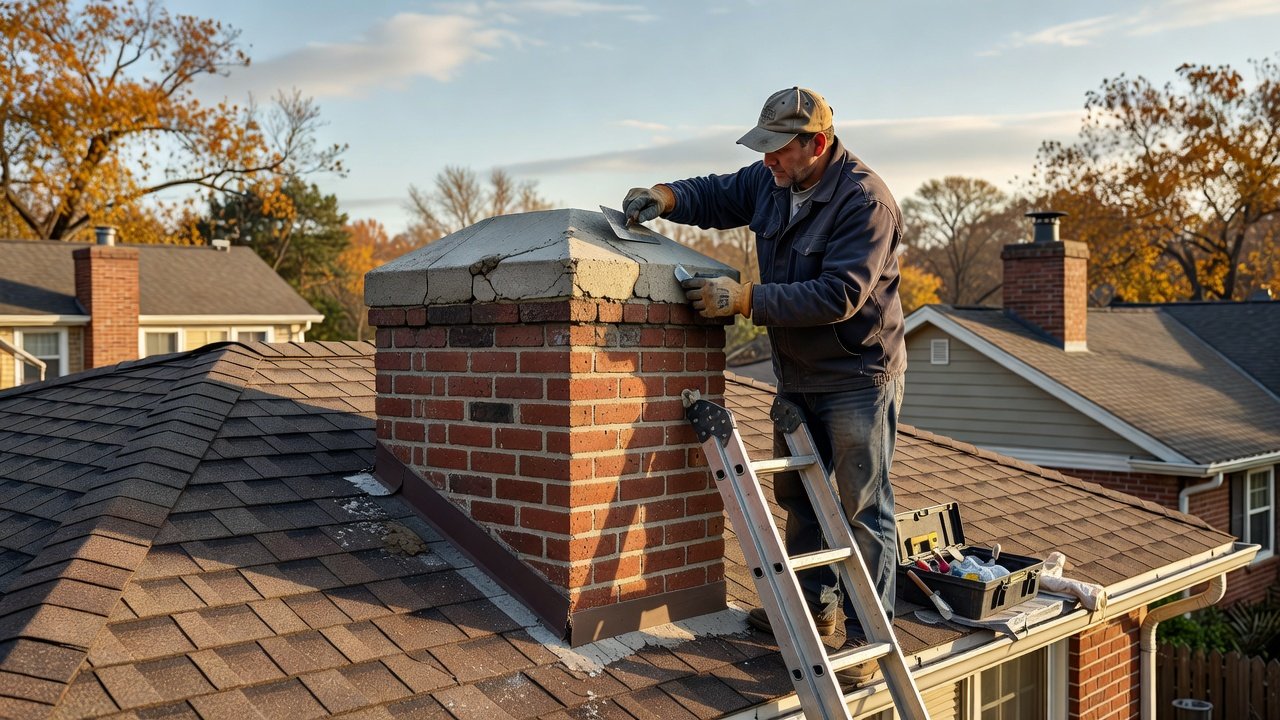
How to Get Your Chimney Crown Repaired Before Winter Costs You More
Most homeowners in Deer Park and West Babylon do not think about their chimney crown until water starts showing up inside the fireplace or signs of masonry damage become impossible to ignore. By then, a repair that might have been relatively straightforward can involve additional work to the flashing, masonry, or other parts of the chimney system. The timing of chimney maintenance matters because weather conditions can affect when certain masonry and repair materials can be applied. If you suspect your chimney crown is damaged, getting it evaluated before the heating season gives you more time to understand the problem and complete necessary repairs. Here is what the process looks like and what homeowners should know before scheduling the work.
Before You Start
The chimney crown is the masonry or concrete structure at the top of a chimney that helps shed water away from the chimney walls and flue opening. It is different from a chimney cap, which is typically a metal cover installed over the flue opening.
A properly designed crown helps protect the masonry below it from water intrusion. CSIA guidance notes that a durable crown should project beyond the chimney walls, slope away from the flue, and include an appropriate separation between the crown and flue liner to accommodate movement.
A damaged crown can contribute to water entering the chimney structure, but it is not always the only possible source of a leak. Flashing, mortar joints, the chimney cap, and other components should also be evaluated.
From the ground, you can use binoculars to look for obvious cracks, missing sections, or other deterioration. Do not climb onto the roof to inspect the crown yourself. Roof and chimney work involves fall hazards that require appropriate equipment and training.
Step 1: Schedule an Inspection Before the Heating Season
Late summer and early fall can be a practical time to have the chimney evaluated because homeowners have time to address repairs before regular fireplace use begins.
The exact timing depends on the repair, the weather, the materials being used, and the contractor’s recommendations. Masonry and sealant products have specific application and curing requirements, so the technician should determine whether current conditions are suitable for the proposed work.
An annual chimney inspection is recommended by CSIA and follows the inspection guidance associated with NFPA 211. CSIA recommends that chimneys be inspected annually and cleaned or repaired when necessary.
Scheduling early also gives you time to address related problems if the inspection reveals more than a damaged crown.
Step 2: Have the Crown and Surrounding Masonry Evaluated
Crown damage should not be evaluated in isolation.
A professional should look at the crown, chimney masonry, flashing, rain cap, and other accessible components that could contribute to water intrusion.
CSIA’s Level 2 inspection guidance specifically includes inspection of the crown and flashing and calls for evaluation of the area where the flue liner passes through the crown.
This matters because repairing a crown without identifying another source of water entry may leave the underlying problem unresolved.
A professional can also determine whether the crown needs a localized repair, resurfacing, or more extensive reconstruction based on its actual condition.
Step 3: Understand the Difference Between Crown Repair and Crown Replacement
Not every damaged crown needs to be completely rebuilt.
A professional may recommend a repair or protective coating when the underlying crown remains structurally sound and the damage is limited. In other cases, deterioration may be extensive enough that rebuilding the crown is the better long-term solution.
The correct repair depends on factors such as:
-
The size and depth of the cracks
-
Whether portions of the crown are missing
-
Whether water has entered the masonry
-
The condition of the flue liner
-
The relationship between the crown and flue liner
-
The condition of the flashing
-
The overall construction of the chimney
Do not rely on a fixed crack-width measurement or a universal price to determine which repair you need. A qualified technician should evaluate the crown in person and explain why a particular repair method is appropriate.
CSIA identifies crown repair or replacement as an important part of protecting masonry chimneys from water damage.
Step 4: Have the Flashing Checked at the Same Time
While the technician is evaluating the crown, ask them to inspect the flashing where the chimney meets the roof.
Flashing provides an important water barrier at the roof-to-chimney intersection. Damaged or separated flashing can allow water into the structure even when the crown appears to be in good condition.
CSIA specifically identifies damaged flashing as a potential source of chimney water intrusion and recommends having it evaluated when leaks are present.
Having the crown and flashing evaluated during the same appointment can help prevent homeowners from repairing one source of water entry while overlooking another.
Step 5: Complete the Repair Before Weather Conditions Become a Problem
The best time to complete a crown repair depends on the specific materials and repair method.
Some masonry products require minimum temperatures and adequate curing conditions. Cold, wet, or freezing weather can affect how certain materials perform.
For that reason, do not assume that every crown repair can be completed safely in winter simply by adding a sealant or rushing the work.
If an inspection identifies a deteriorating crown in early fall, addressing it before consistently cold weather arrives gives the contractor more flexibility and gives the repair time to cure according to the manufacturer’s requirements.
Step 6: Consider Appropriate Masonry Waterproofing
Repairing the crown addresses one potential source of water entry, but the masonry chimney may also benefit from an appropriate water-repellent treatment when recommended by a qualified professional.
CSIA recommends vapor-permeable waterproofing products for masonry chimneys because they allow moisture within the masonry to escape while helping prevent water from entering from outside. CSIA specifically warns against non-vapor-permeable coatings that can trap moisture inside the masonry and accelerate deterioration.
Waterproofing should not be treated as a replacement for repairing a cracked crown, damaged flashing, open mortar joints, or other structural problems. Those issues should be addressed first.
Step 7: Document the Work
Ask for written documentation describing what the technician found, what work was completed, and whether any additional maintenance is recommended.
Photos can also be useful, particularly when the repair involves concealed areas or significant masonry deterioration.
Keeping these records gives you a useful maintenance history for future inspections and repairs. If you sell the home later, documentation can also help explain work that has already been completed.
Troubleshooting Tip: What If the Crown Looks Fine but You Still Have Water Inside?
A crown that looks intact does not necessarily mean the crown is the source of the problem.
If you notice water in the fireplace, rust, staining, damp masonry, or other evidence of water intrusion, the technician should evaluate other possible entry points, including the flashing, rain cap, mortar joints, and areas around the flue.
CSIA identifies dripping or standing water, rust stains, damaged flashing, and other signs as indicators that water may be entering the chimney system.
A more detailed inspection may be appropriate when a basic inspection cannot determine the source of the problem. The inspection level should be selected based on the circumstances and what the technician needs to evaluate rather than automatically assuming every water leak requires a Level 2 inspection. NFPA’s inspection framework states that the scope should be appropriate to the conditions giving rise to the inspection.
Get Your Chimney Crown Checked Before Winter
A cracked or deteriorating chimney crown is easier to address when it is identified before water has had time to damage the masonry below it.
If you own a home in Deer Park, West Babylon, or a surrounding Suffolk County community and you have noticed cracks, missing masonry, water stains, rust, or other signs of chimney deterioration, schedule an inspection before the next heating season.
Ridgewood Chimney serves homeowners throughout its service area, including Deer Park and West Babylon. Contact us for an inspection and an honest assessment of what your chimney crown actually needs.
Related from Deer Park Chimney NY: Chimney Repair in Deer Park, NY — Honest Pricing, Local Expertise · Chimney Repair in Deer Park, NY — Honest Pricing, Local Experts · Chimney Repair in Deer Park — Stop Small Cracks From Becoming Costly D