
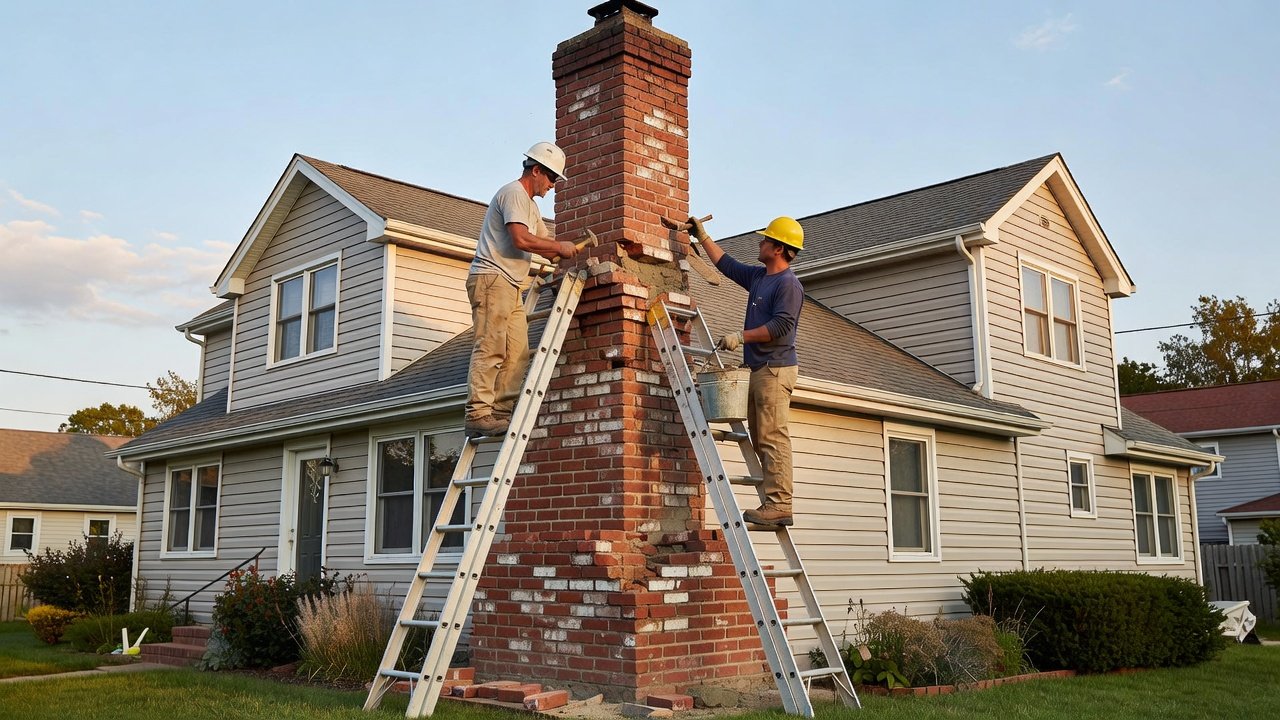
Chimney Masonry Repair in Deer Park and East Farmingdale: What the Job Actually Involves
Cracked mortar, deteriorating brick, and damaged chimney crowns can be easy to overlook until water begins entering the building. By the time a homeowner notices masonry debris, staining, or visible deterioration, the chimney may require more than routine maintenance. The first step is determining exactly what has failed before deciding whether the work is suitable for a homeowner or should be handled by a professional.
Chimney masonry repair can involve repointing deteriorated mortar joints, replacing damaged bricks, repairing or replacing the crown, addressing flashing, or correcting other problems identified during an inspection. The appropriate repair depends on the chimney’s construction, the extent of deterioration, accessibility, and whether other components of the system are affected.
What Chimney Masonry Repair Actually Involves
A chimney is exposed to weather throughout the year. Water intrusion can contribute to deterioration of masonry and other chimney components, making moisture management an important part of chimney maintenance.
The repair process should begin with an assessment of the visible chimney and the accessible portions of the system. The appropriate inspection level depends on the circumstances. A Level 1 inspection is generally used when the chimney and venting system remain under the same conditions of service and readily accessible portions can be evaluated. A Level 2 inspection provides a more extensive evaluation and includes video scanning or another appropriate method of examining the interior of the flue when the circumstances warrant it.
From there, the masonry work depends on what is actually deteriorated.
Repointing involves removing deteriorated mortar from joints and installing new compatible mortar.
Brick replacement involves removing damaged masonry units and replacing them with suitable materials.
Crown repair addresses deterioration of the chimney’s upper weather-exposed component.
Flashing repair addresses the transition between the chimney and roof. Because flashing involves both masonry and roofing, it may require a contractor with experience in both areas.
The size and complexity of the chimney can affect the amount of labor and equipment required. Scaffolding, difficult roof access, extensive brick replacement, or structural concerns can all expand the scope of the project.
What a Homeowner Can Reasonably Handle
Some basic observation and maintenance tasks are appropriate for homeowners.
You can photograph visible cracks or deterioration from a safe location and monitor whether the condition changes. You can also keep the area around the chimney clear of loose debris and arrange for a professional assessment when you notice deterioration.
Applying a masonry water repellent is more situation-dependent. The product must be compatible with the masonry and applied according to the manufacturer’s instructions. Waterproofing should not be used to conceal active structural or moisture problems.
Roof and chimney work deserves more caution. Replacing a chimney component may require working at height, and a task that looks simple from the ground can become hazardous once roof access is involved.
For that reason, homeowners should avoid recommending roof-level masonry repairs as routine DIY projects. If you are not experienced with masonry and safe roof access, having a qualified professional evaluate the problem is the better choice.
Why Mortar Compatibility Matters
Mortar selection is important when repairing masonry. The replacement mortar should be compatible with the existing brick and the construction of the chimney.
It is not accurate to say that one mortar type, such as Type S, is automatically correct for every chimney. Mortar selection should consider the existing masonry, structural requirements, exposure, and applicable specifications.
Using an unnecessarily hard mortar can damage softer historic brick by concentrating stress in the masonry units rather than allowing the mortar joint to perform as intended. The correct repair material should therefore be selected for the particular chimney rather than chosen from a universal recipe.
When You Should Hire a Professional
Professional evaluation is appropriate when the repair involves difficult access, extensive masonry deterioration, structural concerns, flashing, or the chimney’s interior flue.
Flashing
Flashing repair requires careful attention to how the chimney and roof shed water. Poorly executed work can leave pathways for moisture to enter the building.
If flashing is damaged or suspected of leaking, ask the contractor to identify the affected area and explain the proposed repair.
Structural Concerns
A chimney that appears to be leaning, separating from the surrounding structure, or developing significant cracking deserves professional evaluation.
Do not rely on a universal crack-width measurement to determine whether a chimney is structurally unsafe. The location, direction, pattern, extent, and surrounding conditions all matter.
Interior Flue Problems
Flue problems should be evaluated according to the inspection level and the type of chimney or appliance involved. A Level 2 inspection can provide a more extensive examination of the interior flue, including video scanning or another appropriate method.
If a liner is damaged or otherwise unsuitable, the appropriate repair depends on the specific system. A contractor should explain what was found and why a particular repair or replacement is being recommended.
Work Involving Roof Access
Any repair that requires substantial roof access, scaffolding, or specialized equipment is better evaluated by a professional with the appropriate training and equipment.
The issue is not simply whether someone knows how to apply mortar. It is whether the entire job can be performed safely and whether the finished repair will be appropriate for the chimney.
What Does Chimney Masonry Repair Cost?
There is no reliable single price for chimney masonry repair in Deer Park or East Farmingdale.
A localized repair involving a small section of deteriorated mortar is fundamentally different from extensive repointing, brick replacement, crown reconstruction, flashing work, or structural rebuilding.
The estimate can depend on:
- Amount of masonry requiring repair
- Chimney height
- Roof and site access
- Scaffolding requirements
- Brick and mortar compatibility
- Crown condition
- Flashing condition
- Extent of water-related deterioration
- Required cleanup
- Whether additional problems are discovered during the work
Rather than relying on a generic online price range, obtain at least two written estimates for substantial repairs. Ask each contractor to describe the affected area, repair method, materials, access requirements, cleanup, warranty terms, and any exclusions.
If the estimates differ significantly, ask the contractors to explain the difference in scope before choosing one.
Getting a Real Assessment Before You Spend Money
The best starting point is an assessment of the actual chimney rather than a generic repair package.
A qualified contractor should be able to explain what is deteriorated, whether the problem appears to be localized or more extensive, and what repair is appropriate. If a major repair is proposed, photographs and a written scope can help you compare the recommendation with another contractor’s opinion.
Homeowners should also verify the contractor’s credentials, insurance, and any applicable local registration or permit requirements before approving the work.
For homeowners seeking chimney masonry repair in Deer Park or East Farmingdale, the goal should be a repair that addresses the actual source of the problem rather than simply covering visible damage. Ask questions, compare written scopes, and make sure you understand why each recommended repair is necessary before authorizing the work.
Related from Deer Park Chimney NY: Professional Chimney Repair in Deer Park, NY · Chimney Repair in Deer Park, NY · Chimney Repair in Deer Park — What It Costs, What It Fixes, and Who Do