
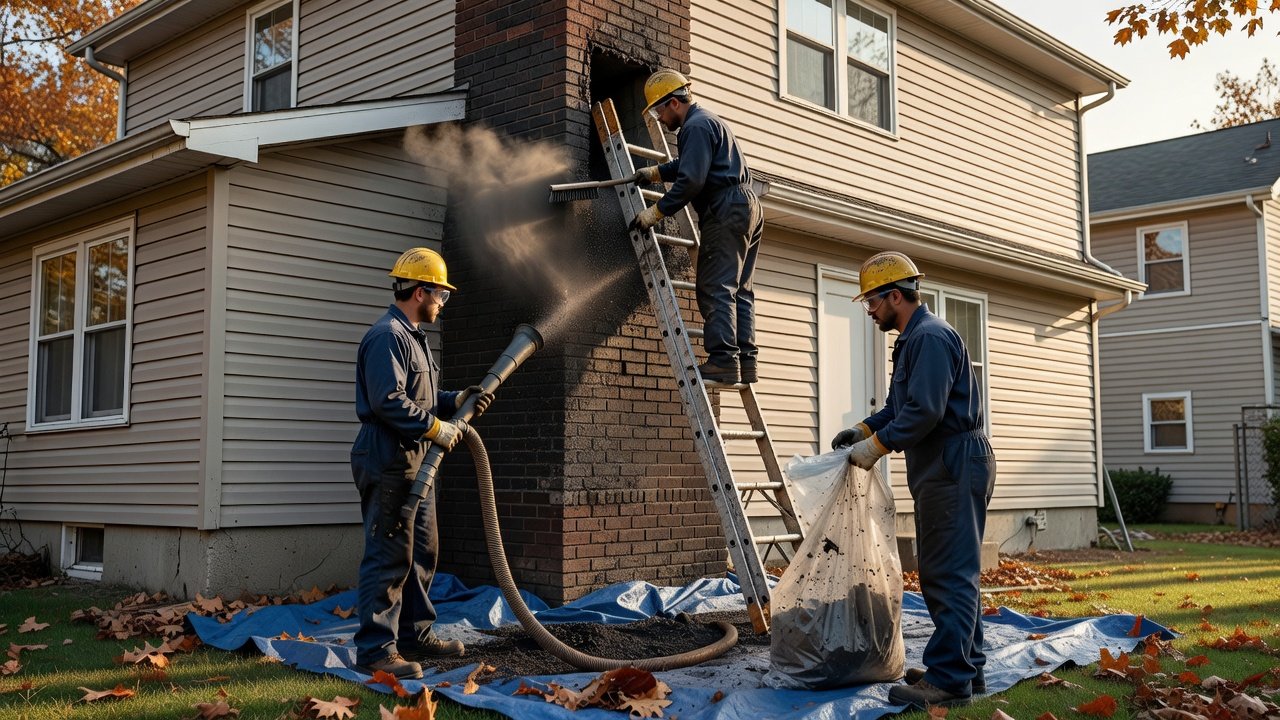
Creosote Removal Deer Park NY: When to Schedule It and What to Expect
Creosote can build up inside a chimney without producing an obvious warning. Homeowners may continue using a fireplace while deposits accumulate on the flue walls.
For homeowners in Deer Park, Lindenhurst, and nearby western Suffolk communities, the important question is not simply what month to schedule chimney service. It is whether the chimney has been inspected, whether cleaning is necessary, and whether the deposits require ordinary sweeping or more specialized removal.
Why Creosote Requires Attention
Creosote forms when combustion byproducts from burning wood cool and condense on the inside of the chimney. EPA explains that creosote is a highly combustible residue and that buildup can contribute to chimney fires. (epa.gov)
Several factors can increase creosote formation, including burning unseasoned wood, restricting the air supply, and operating conditions that allow smoke to remain in a cooler chimney for longer. (epa.gov)
That is why chimney maintenance should not be based solely on the calendar.
Creosote Does Not Always Look the Same
Homeowners sometimes hear creosote described as having “Stage 1, Stage 2, and Stage 3.”
That terminology should not be presented as a formal NFPA classification.
Creosote can appear as flaky or powdery material, crusty deposits, sticky or tar-like material, or hard, shiny, glazed buildup. The condition of the deposit affects how difficult it is to remove.
Ordinary soot and deposits may be removable with standard chimney brushes. Hard or glazed deposits can require more specialized mechanical cleaning methods.
If you see substantial shiny, sticky, or hardened material, do not assume that a basic DIY brushing will remove it completely. Have the chimney evaluated by a qualified professional.
When Should You Schedule Creosote Removal?
There is no single month that is mandatory for every chimney.
Late Summer and Early Fall
Late summer can be a convenient time to arrange an inspection or cleaning before regular fireplace use resumes.
Scheduling before the heating season also gives you more time to address problems if the inspection identifies a damaged liner, deteriorating masonry, a chimney cap problem, or another condition.
However, there is no need to claim that August or early September is universally the “best” period. The appropriate timing depends on when the chimney was last inspected, how much it has been used, and what the inspection finds.
Fall
Fall is when many homeowners begin preparing their fireplaces for colder weather.
If you have not had the chimney inspected within the recommended interval, arranging service before regular use begins is a practical approach.
Waiting until the first cold weekend can make scheduling less convenient because many homeowners are seeking service at the same time.
Winter
A chimney can be inspected and cleaned during winter when necessary.
Do not continue using a fireplace simply because the calendar has reached the middle of the heating season. If you notice heavy deposits, repeated smoke entering the home, an obstruction, or other warning signs, arrange an evaluation before continuing to burn.
Spring
Spring can also be a useful time for chimney maintenance.
After the main heating season, homeowners can address deposits or repairs before the next period of regular fireplace use.
The important point is to avoid treating spring or summer cleaning as a substitute for an annual inspection. The chimney should be evaluated according to its condition and use.
How Your Burning Habits Affect Creosote
The type of wood you burn matters.
EPA recommends using dry, seasoned wood with moisture content below 20%. Wet or unseasoned wood produces more smoke, which can contribute to creosote formation. (epa.gov)
EPA also recommends maintaining adequate airflow and avoiding practices that produce excessive smoke. (epa.gov)
A moisture meter can help you determine whether firewood is sufficiently dry.
If your wood is consistently wet, changing your burning practices may reduce future buildup, but it does not remove creosote that is already inside the chimney.
What Does Professional Creosote Removal Involve?
The exact process depends on the condition of the chimney.
A professional may begin by examining the fireplace, appliance connection, chimney, and accessible components.
If ordinary deposits are present, appropriate chimney brushes and vacuum equipment may be sufficient.
Hard or glazed deposits may require specialized mechanical methods.
The technician should also look for conditions that could have contributed to the buildup, including:
- Poor burning practices
- Restricted airflow
- Blockages
- Damaged chimney components
- Problems with the liner
- Improper appliance or chimney configuration
- Excessive moisture
- Other venting concerns
Cleaning the deposits without understanding why they accumulated can leave the underlying issue unresolved.
Does Every Chimney Cleaning Require a Camera?
No.
A camera can provide valuable information about the interior of a chimney, but it is not automatically required for every routine cleaning.
The appropriate inspection level depends on the circumstances.
A Level 1 inspection is generally used for routine situations where the chimney and appliance have not undergone significant changes and accessible portions can be examined.
A Level 2 inspection is more extensive. It can be appropriate for circumstances such as a property sale, relining, a chimney or building fire, certain weather or seismic events, or an operating malfunction that could have caused damage.
Level 2 includes video scanning or a similar examination of the chimney interior.
If a technician recommends a camera inspection, ask what condition or circumstance prompted the recommendation.
What If You Suspect Heavy Creosote?
Do not try to judge the entire chimney from the fireplace opening.
A flashlight may reveal deposits in part of the visible flue, but it cannot provide a complete assessment of inaccessible areas.
If you see significant hardened or glazed deposits, have the chimney professionally evaluated.
Do not assume that a few passes with a household brush have removed all of the material.
What Happens If Creosote Is Ignored?
Creosote is combustible.
If enough combustible deposit accumulates and the chimney reaches conditions capable of igniting it, a chimney fire can occur. A chimney fire can damage the flue and other components of the chimney system.
CSIA identifies signs of possible chimney-fire damage that can include cracked or collapsed flue tiles, damaged chimney components, exterior masonry cracks, and other evidence of abnormal heat exposure.
If you suspect that a chimney fire has occurred, do not continue using the fireplace until the chimney has been professionally evaluated.
What About Carbon Monoxide?
A damaged or obstructed chimney can create a venting problem, but creosote should not be described as automatically causing carbon monoxide to enter a home.
Carbon monoxide exposure can result from improperly vented combustion appliances, blocked or damaged venting systems, or backdrafting.
EPA recommends installing carbon monoxide detectors on every floor and outside sleeping areas and having wood-burning appliances and chimneys inspected annually. (epa.gov)
If you smell smoke inside the home or notice a venting problem, stop using the appliance and have the system checked.
How Often Should You Have the Chimney Inspected?
Annual inspection is a useful baseline.
EPA recommends annual inspection of wood-burning appliances and chimneys. (epa.gov)
That does not mean every chimney needs the same cleaning frequency.
The need for cleaning depends on use, fuel, installation, burning habits, and the amount and condition of deposits.
If you burn frequently, use improperly seasoned wood, or notice significant buildup, the chimney may need attention sooner.
What Does Creosote Removal Cost?
There is no reliable universal price for creosote removal in Deer Park or Lindenhurst.
The cost can depend on:
- Amount of buildup
- Type and condition of the deposits
- Chimney height and configuration
- Access
- Liner type
- Appliance type
- Inspection level
- Additional repairs or maintenance
A routine cleaning and a chimney requiring specialized removal of hardened deposits are not equivalent services.
When requesting an estimate, ask what inspection and cleaning procedures are included and what circumstances could result in additional charges.
What Should You Ask the Chimney Professional?
Before scheduling service, ask:
- When was the chimney last inspected?
- What inspection level will be performed?
- What type of deposits were found?
- Does the quoted service include removal of those deposits?
- Is video inspection included or recommended separately?
- Will additional repairs require approval before work begins?
- Can the technician document significant findings?
- Is the technician properly trained or certified?
A clear explanation is more useful than a low advertised price with an undefined scope of work.
The Best Time to Deal With Creosote
For Deer Park and Lindenhurst homeowners, the practical answer is simple: do not wait for the middle of the heating season if you already know the chimney needs attention.
Late summer, early fall, and spring can all be convenient periods for inspection and cleaning. But a chimney that shows warning signs should be evaluated regardless of the month.
EPA recommends annual inspection and burning dry, seasoned wood with moisture below 20%. (epa.gov)
If your chimney has not been inspected recently or you suspect significant creosote buildup, arrange an evaluation before using the fireplace again.
Related from Deer Park Chimney NY: Chimney Repair in Deer Park, NY — Honest Pricing, Local Expertise · Professional Chimney Repair in Deer Park, NY
Our services
North Lindenhurst, NY · Copiague, NY · North Amityville, NY · Lindenhurst, NY · West Babylon, NY · Wyandanch, NY