
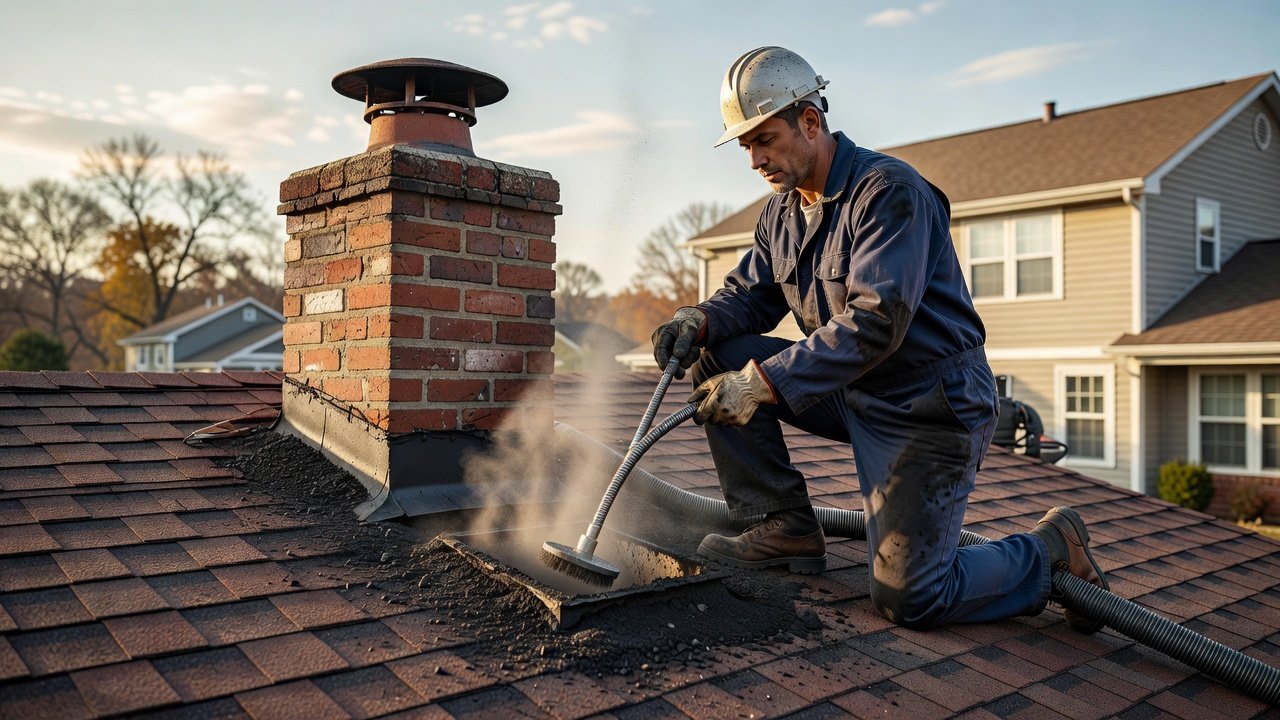
The Right Time to Clean Your Chimney Flue in Deer Park
For homeowners who use a fireplace or wood stove, chimney maintenance is not simply a matter of picking a convenient date on the calendar. The right time to have the chimney inspected and cleaned depends on how often it is used, what type of appliance it serves, the amount and type of deposits present, and whether any damage or obstruction has developed.
For homeowners in Deer Park, Central Islip, and nearby Suffolk County communities, late summer and early fall can be convenient times to arrange chimney service because the fireplace may not be in regular use yet. But there is an important distinction: there is no single season when every chimney needs to be cleaned. CSIA guidance follows NFPA 211 in recommending that chimneys, fireplaces, and vents be inspected at least once a year, with cleaning and maintenance performed when necessary. (CSIA)
Why Chimney Flue Cleaning Matters
Every wood-burning fire produces combustion byproducts. Some of those deposits can accumulate inside the chimney and include soot and creosote.
CSIA explains that there is no universal cleaning schedule for every chimney. Cleaning frequency depends on factors including how much the chimney is used, the type of installation, the fuel being burned, and the homeowner’s burning practices. CSIA’s homeowner guide recommends cleaning when soot and creosote deposits approach or exceed 1/4 inch, while glaze deposits exceeding 1/8 inch should be removed. (CSIA homeowner guide)
For masonry fireplaces, CSIA’s current homeowner guidance recommends sweeping at about 1/8 inch of sooty buildup and sooner when glaze is present. Factory-built fireplaces should be swept when appreciable buildup occurs. (CSIA)
The important point is that annual inspection does not necessarily mean annual sweeping. An inspection determines whether cleaning or other maintenance is actually needed.
Late Summer: A Convenient Time to Get Ahead of the Season
August and early September can be a practical time to schedule a chimney inspection or cleaning.
The fireplace may have seen little or no use during the warmer months, giving homeowners an opportunity to address accumulated deposits or maintenance issues before colder weather arrives.
An inspection can also reveal problems that are unrelated to creosote, including obstructions, deterioration, or damaged components. CSIA notes that annual inspections can identify issues such as animal nests and chimney deterioration even when the fireplace has not been used recently. (CSIA)
Getting the work done before regular fireplace use resumes also leaves more time to address any repairs that may be recommended.
That makes late summer a convenient planning window, rather than a universally required cleaning season.
Fall: Still a Good Time to Schedule Service
September and October are also reasonable times to have the chimney evaluated.
The key is not to wait until the first cold evening before thinking about maintenance.
If an inspection reveals a damaged liner, masonry deterioration, an obstruction, or another issue requiring additional work, handling it before regular fireplace use begins can be much easier.
Fall is also when homeowners often start thinking about fireplaces again, so scheduling early can help you avoid trying to arrange service at the last minute.
But if you have already started using the fireplace, that does not mean it is too late. The condition of the chimney matters more than the month on the calendar.
Winter: It Is Not Too Late to Clean
Winter is not automatically the wrong time for chimney cleaning.
If a chimney needs cleaning during the heating season, delaying necessary maintenance simply because it is winter does not make the situation safer.
For example, a homeowner may notice unusual smoke, a persistent fireplace odor, poor draft, or visible deposits after beginning regular use. Those signs warrant attention regardless of the season.
If you suspect a chimney fire has occurred, however, do not continue using the chimney until it has been evaluated by a qualified professional. CSIA advises homeowners not to use a chimney after a chimney fire until it has been swept and professionally evaluated because damage such as joint failure, metal fatigue, or structural cracking may not be visible from above or below. (CSIA)
Spring: A Good Time to Address the Previous Season
Spring can also be a useful time to schedule chimney service, particularly if you have finished using the fireplace for the season.
Cleaning after a period of heavy use removes accumulated deposits before the chimney sits unused for the warmer months.
CSIA notes that chimney odors can become more noticeable during warmer, more humid conditions because creosote deposits can produce odors that are drawn back into the home. (CSIA)
Spring inspection can also identify problems that developed during the previous heating season.
There is no need to call spring cleaning a mandatory or universally superior option. The better approach is to inspect the chimney regularly and clean it when the condition of the system indicates that cleaning is necessary.
What Happens When You Wait Too Long?
The problem with delaying chimney maintenance is that you may not know how much buildup or deterioration is present until symptoms appear.
A chimney can develop deposits or obstructions without producing an obvious warning.
CSIA explains that chimney deposits can interfere with proper venting, contribute to chimney fires, create odors, and contribute to conditions that may allow carbon monoxide to enter the home. (CSIA homeowner guide)
Hard or glazed deposits can also require more specialized cleaning methods than ordinary soot or creosote.
CSIA’s homeowner guide notes that standard brushing is effective for soot and ordinary creosote, while mechanical cleaning methods may be needed for hard creosote or glaze. It specifically cautions that mechanical cleaning equipment should be used by professional sweeps familiar with the equipment. (CSIA homeowner guide)
That is one reason postponing maintenance can turn a straightforward cleaning into a more involved service.
When Does a Level 2 Inspection Make Sense?
A Level 2 inspection is more extensive than a routine Level 1 inspection.
CSIA guidance identifies circumstances that can call for a Level 2 inspection, including changes in the appliance or fuel type, a property sale, chimney relining, a building or chimney fire, certain weather or seismic events, or an operating malfunction that may have damaged the chimney. A Level 2 inspection includes video scanning or a similar examination of the chimney interior. (CSIA Level 2 inspection guidance)
That does not mean every Deer Park chimney needs a camera inspection every year.
The appropriate inspection level depends on the condition and circumstances of the chimney.
How Much Does Chimney Cleaning Cost in Deer Park?
There is no reliable single price that applies to every chimney in Deer Park or Central Islip.
The final cost can depend on:
- The type of fireplace or appliance
- Chimney height and accessibility
- Amount and type of deposits
- Whether specialized cleaning equipment is needed
- Whether an inspection beyond Level 1 is appropriate
- Obstructions or animal nests
- Chimney or liner damage
- Additional repairs identified during the inspection
A straightforward cleaning of an accessible chimney with ordinary deposits is very different from a chimney requiring specialized mechanical cleaning or additional inspection.
Rather than choosing a contractor based solely on the lowest advertised price, ask what the quoted service includes and whether additional work would require separate approval.
Why Timing Matters More Than a Specific Month
The best time to address a chimney problem is before you need the fireplace and not after a problem has already developed.
Late summer and early fall can be convenient because they give homeowners time to inspect, clean, and address repairs before regular fireplace use resumes.
Spring can also be a sensible time to deal with deposits left from the previous heating season.
But if your chimney needs cleaning in December, February, or any other month, waiting until the “perfect” season is not the right strategy.
CSIA and NFPA guidance centers on regular inspection and cleaning when necessary, not on one universal calendar date. (CSIA)
Schedule Your Chimney Inspection Before You Need the Fireplace
If your Deer Park or Central Islip chimney has not been inspected recently, scheduling an evaluation before regular fireplace use is a sensible place to start.
A professional can determine whether the chimney needs cleaning, whether deposits require specialized removal, and whether there are obstructions or other conditions that need attention.
The goal is not to clean a chimney simply because the calendar says it is time.
The goal is to know what condition the chimney is in before you depend on it for another season of fires.
Related from Deer Park Chimney NY: Chimney Repair in Deer Park — What It Costs, What It Fixes, and Who Do · Professional Chimney Repair in Deer Park, NY