
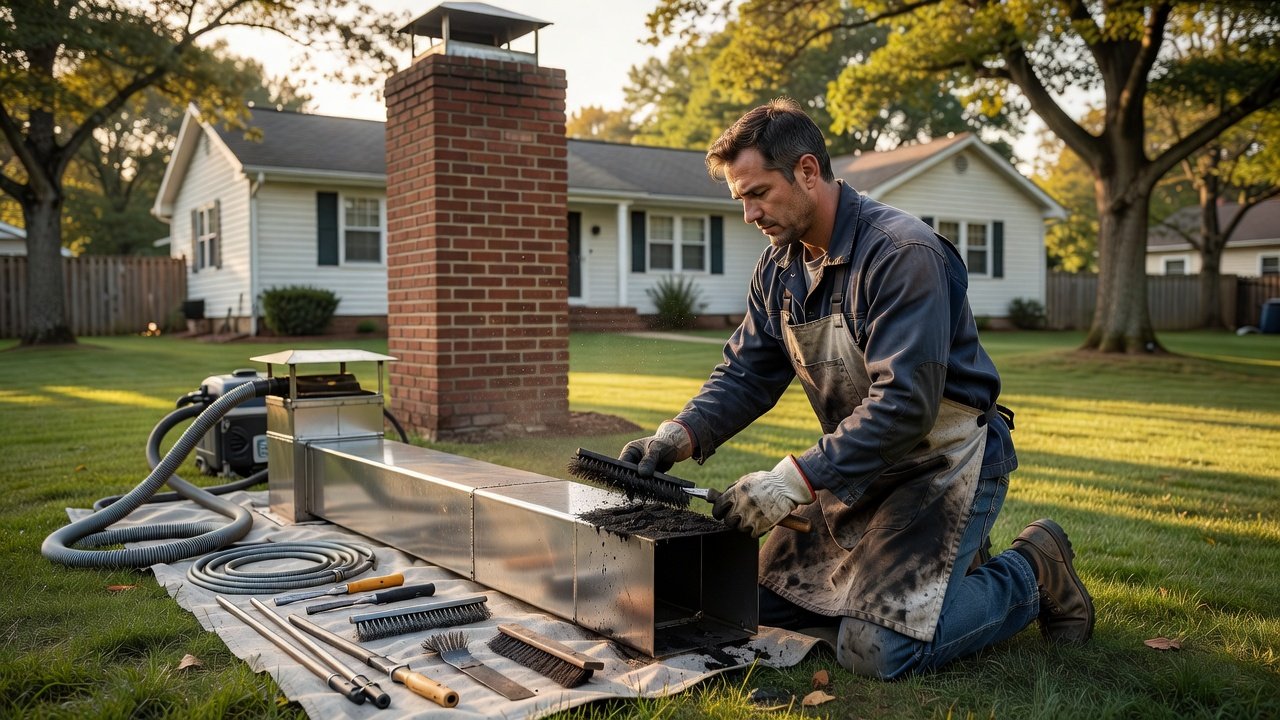
Chimney Cleaning in Deer Park, NY: What You Can Handle and What You Shouldn’t Touch
Creosote can build up inside a chimney without any obvious warning from the living room. Homeowners may not realize there is a problem until they notice an odor, poor draft, smoke entering the room, or visible debris in the firebox. Some basic fireplace maintenance can be handled safely by a homeowner. Chimney cleaning, detailed inspections, and repairs require more specialized equipment and knowledge. Here is what Deer Park homeowners can reasonably handle themselves and where it makes sense to call a professional.
What’s Actually Happening Inside Your Flue
Wood combustion produces gases and particles that travel through the chimney. As those gases cool, deposits can form on the interior surfaces of the flue. The amount and condition of those deposits depend on factors such as the type of wood burned, moisture content, burning practices, fireplace design, and frequency of use.
Light deposits can often be removed with standard chimney-cleaning equipment. Heavier or glazed creosote may require more specialized cleaning methods.
NFPA 211 recommends annual inspection of chimneys, fireplaces, and vents, with cleaning performed when deposits or other conditions warrant it. Regular inspection is also important because creosote is not the only potential problem. Older Deer Park homes may have aging clay tile liners, deteriorated mortar, damaged dampers, or chimney caps that allow moisture and debris into the system.
A chimney that looks fine from the fireplace opening can still have problems farther up the flue. That is one of the main reasons professional inspection remains important.
What a Capable Homeowner Can Safely Handle
There are several routine tasks that most homeowners can perform without attempting to service the entire chimney system.
Firebox cleaning. Once the fireplace is completely cold, homeowners can remove excess ash using appropriate tools and a suitable ash container. Follow the fireplace manufacturer’s recommendations for ash removal and disposal. Never handle hot or recently burned material as though it were completely cold.
Visual checks. You can look inside the firebox for obvious cracks, damaged firebrick, loose mortar, or unusual debris. A flashlight can help you see areas that are otherwise difficult to inspect.
Ground-level exterior inspection. Binoculars can help you look for obvious problems such as a missing chimney cap, displaced bricks, visible crown deterioration, or staining. This is useful for identifying a reason to call a professional, but it does not replace a roof-level inspection.
Checking the damper. You can operate the damper and confirm that it appears to open and close normally. If it is stuck, heavily rusted, warped, or damaged, avoid forcing it and have it evaluated.
These basic checks are useful because they help homeowners notice changes. They should not be treated as a substitute for professional chimney inspection.
Where DIY Chimney Cleaning Becomes a Real Risk
The flue itself is where homeowners should be much more cautious.
Proper chimney cleaning requires equipment that matches the chimney and liner type. Clay tile, stainless steel, and other chimney systems can have different cleaning requirements. Using an inappropriate brush or forcing equipment through a damaged liner can cause additional damage.
Containment is another concern. Cleaning a chimney releases soot, creosote, and fine particles. Professional chimney sweeps use appropriate vacuum and containment equipment to limit the amount of debris that enters the home.
Heavy or glazed creosote also changes the cleaning process. A homeowner who cannot confidently identify the condition of the deposits may not know which cleaning method is appropriate. Specialized equipment or additional treatment may be necessary.
The same applies to liner inspection. A flashlight from the firebox cannot provide a complete view of a long flue. A Level 2 inspection uses video scanning to evaluate accessible portions of the chimney interior when the circumstances call for a more detailed inspection.
If you see pieces of flue tile, significant cracks, heavy deposits, or an obstruction, stop using the fireplace and have the chimney evaluated before lighting another fire.
Repairs Are Not a DIY Cleaning Project
Some chimney problems require more than cleaning.
Cracked or deteriorated flue liners can require repair or relining. Damaged smoke chambers may require specialized refractory materials. Crown deterioration, flashing problems, and extensive masonry damage can also require professional repair.
Working on these components involves more than applying a patch or replacing a visible piece. The repair needs to be appropriate for the chimney construction, appliance, and condition of the system.
Homeowners should also check local requirements before undertaking structural chimney work. Permit requirements can vary by municipality and by the scope of the project.
When Deer Park Homeowners Should Call a Professional
A professional chimney inspection is particularly important when:
- You do not know when the chimney was last inspected.
- You see pieces of tile, brick, or mortar in the firebox.
- Smoke is entering the living space during normal operation.
- You notice heavy or glazed creosote.
- The damper does not operate correctly.
- Water is entering the fireplace after rain.
- You see cracks or significant deterioration in the chimney.
- The home has recently been purchased and there is little service history.
- The fireplace or heating appliance has been changed or replaced.
- The chimney has experienced a fire or another event that may have caused damage.
These conditions do not all require the same response. A qualified technician should explain what was found and what level of inspection or repair is appropriate.
What Deer Park Homeowners Should Expect to Pay
A standard chimney cleaning and Level 1 inspection in the Deer Park area may cost approximately $150 to $250 for a single system. Pricing varies according to the chimney configuration, accessibility, amount of buildup, and services included.
A Level 2 inspection with video scanning generally costs more and may fall around $300 to $450, depending on the system and inspection requirements.
Repairs are priced separately. A damper replacement may cost several hundred dollars, while a stainless steel liner installation can reach several thousand dollars depending on flue length, diameter, access, appliance requirements, and installation complexity.
Treat these figures as general service ranges rather than guaranteed prices. A reputable contractor should inspect the system and explain the scope before giving you a final repair estimate.
The Bottom Line on DIY Chimney Maintenance
There is nothing wrong with homeowners handling basic firebox maintenance and keeping an eye on visible changes. The problem begins when routine maintenance is mistaken for a complete chimney inspection or professional cleaning.
Your chimney is a system. Problems inside the flue, smoke chamber, crown, or liner may not be visible from the fireplace. Professional cleaning removes deposits, while inspection helps identify conditions that cleaning alone cannot correct.
If your fireplace in Deer Park, West Babylon, Wyandanch, or another western Suffolk County community has not been professionally inspected recently, scheduling an evaluation before regular heating-season use is a practical next step.
Ridgewood Chimney serves homeowners throughout the area with chimney cleaning and inspection services. Contact us for an inspection estimate and get a clear explanation of what your chimney needs, what should be addressed now, and what can wait.
Our services
Wyandanch, NY · Farmingdale, NY · East Farmingdale, NY · Deer Park, NY · Chimney Caps, Crowns & Waterproofing · Flue & Liner Repair