
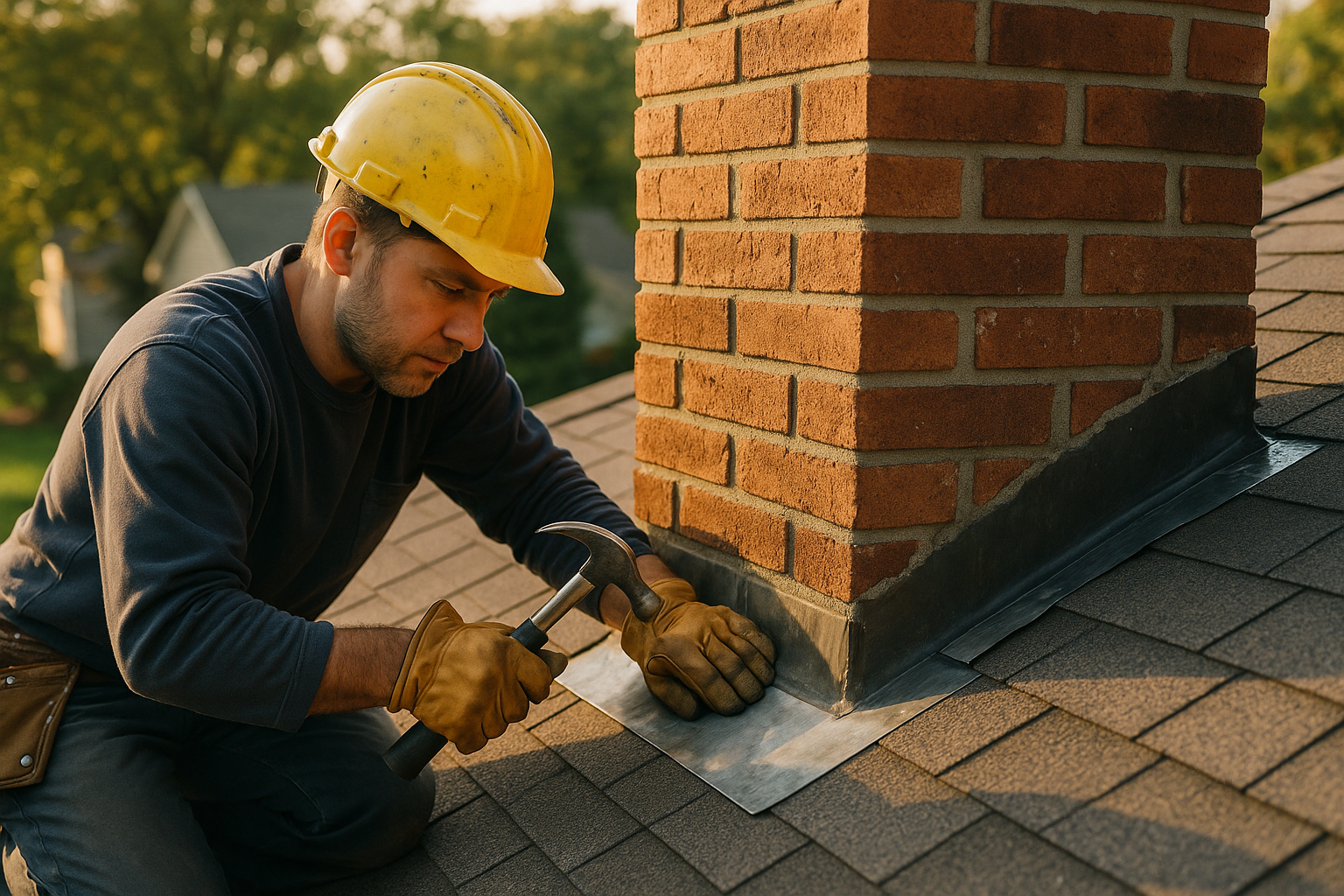
Chimney Flashing Repair in Deer Park, NY: What It Costs and How to Hire Right
Water intrusion around a chimney often starts with a small gap where the chimney meets the roof. By the time a homeowner notices a ceiling stain, moisture may have already affected the roof decking or framing below. In Deer Park, Babylon, and surrounding Suffolk County communities, chimney flashing is especially important because many homes have roof designs where the flashing is exposed to years of rain, snow, and temperature changes. Understanding the typical cost of flashing repair and knowing how to evaluate a contractor can help homeowners address the problem before it becomes more expensive.
What Chimney Flashing Repair Costs in Deer Park
Chimney flashing repair in Deer Park typically costs between $350 and $1,500, depending on the condition of the existing flashing and the amount of work required.
A simple resealing job on accessible flashing may cost around $350 to $600. Partial flashing replacement generally falls between $550 and $900, while a complete flashing system replacement can range from $800 to $1,500. More extensive work involving a chimney saddle or cricket may cost $1,200 to $2,000 or more.
These are general ranges rather than fixed quotes. The condition of the chimney, roof accessibility, materials, and extent of water damage all affect the final price.
What Affects the Cost?
Roof Pitch and Accessibility
A contractor can usually work more efficiently on a low-slope roof with easy access. Steeper roofs require additional safety equipment, setup, and labor.
Homes with difficult roof configurations in Deer Park and North Babylon may therefore cost more to service. This difference is legitimate when the contractor needs additional time and equipment to access the chimney safely.
Flashing Material
The material used for the repair also affects the price. Aluminum and galvanized steel are commonly used options, while more durable materials can cost considerably more.
Ask the contractor what material they plan to use and why it is appropriate for your roof and chimney. A professional should be able to explain the expected service life and how the material will be integrated with the existing masonry and roofing.
Chimney Size and Roof Configuration
A large chimney serving multiple flues requires more flashing material than a small single-flue chimney. Roof configuration also matters.
A chimney located near a roof valley, hip, or other complicated area can require more detailed flashing work than one installed on a straightforward roof section.
Condition of the Masonry
Flashing cannot properly protect a chimney if the masonry surrounding it is deteriorating. If the mortar joints where the counter flashing is installed are damaged, those areas may need to be repaired before new flashing can be installed.
A contractor should identify these problems before beginning the work rather than simply covering them with new sealant.
Existing Water Damage
The flashing itself may not be the only problem. If water has already reached the roof decking or structural framing, additional repairs may be necessary.
This can increase the total project cost significantly. A reputable contractor should explain what they find and distinguish chimney flashing work from any necessary roof or structural repairs.
What Should Be Included in the Repair?
A proper flashing repair should involve more than simply applying a bead of caulk around the chimney.
Depending on the scope, the work may include removing failed sealant or damaged flashing, inspecting the surrounding masonry and roof area, installing new flashing material, and properly integrating the flashing with the roof covering.
The contractor should also look at the visible condition of the chimney crown and cap while accessing the area.
Homeowners should ask whether a chimney inspection is included or billed separately. A flashing repair addresses the roof-to-chimney connection, while a complete chimney inspection evaluates other components of the chimney system.
How to Choose the Right Contractor
Do not hire a contractor based solely on the lowest price. Chimney flashing involves both roofing and masonry, so the person performing the work should understand how the two systems interact.
Before hiring anyone, ask:
- Is the technician CSIA certified or working with a CSIA-certified chimney professional?
- What type of flashing material will you use?
- Are you replacing the flashing or simply resealing it?
- Will you inspect the masonry around the flashing?
- What happens if you find water damage underneath?
- Do you carry liability insurance for roof work?
- Will I receive a written estimate?
- Is the warranty included in the quoted price?
A contractor who answers these questions clearly is easier to evaluate than someone who provides only a single price.
Red Flags to Watch For
Be cautious about contractors who provide a price without seeing the chimney. Flashing conditions cannot always be accurately assessed from the ground or through a phone conversation.
Other warning signs include pressure to approve the work immediately, a refusal to provide a written estimate, or an unusually low quote that appears to cover only sealant.
A $150 quote may sound attractive, but if the actual problem requires replacement of deteriorated flashing, the cheapest option may simply postpone the repair.
You should also be cautious if a contractor recommends extensive work without showing you what is wrong. Ask for photographs of damaged flashing, deteriorated mortar, or visible water damage whenever possible.
Get Multiple Written Estimates
For significant flashing repairs, getting at least three written estimates is a practical way to compare contractors.
Make sure each estimate identifies the same scope of work. One contractor may recommend resealing while another recommends complete replacement. Those are different services and should not be compared solely by price.
Look for estimates that clearly identify the materials, labor, scope of work, and any additional masonry or roofing repairs.
Timing can also affect scheduling. Spring and early fall are busy periods for many roofing and chimney contractors, so addressing a known flashing problem before peak demand can give you more flexibility.
Do Not Ignore Water Stains Around the Fireplace
A water stain near a fireplace should not automatically be blamed on the roof or chimney flashing, but it deserves investigation. Water can enter through damaged flashing, a cracked crown, deteriorated masonry, or other openings around the chimney.
The longer moisture remains inside the roof or chimney structure, the greater the possibility of additional damage.
Ridgewood Chimney serves Deer Park, Babylon, North Babylon, West Babylon, and surrounding Suffolk County communities. If you have noticed water stains near your fireplace or suspect damaged chimney flashing, schedule an inspection and request a written estimate before the problem gets worse.
Related from Deer Park Chimney NY: Professional Chimney Repair in Deer Park, NY · Chimney Repair in Deer Park, NY · Chimney Repair in Deer Park, NY
Our services
Professional Chimney Services in Passaic, NJ · Chimney Commercial Services · Chimney Cleaning Services · Chimney Repair Services · Chimney Inspections Services · Home